
Why Printing Your Photographs Matters
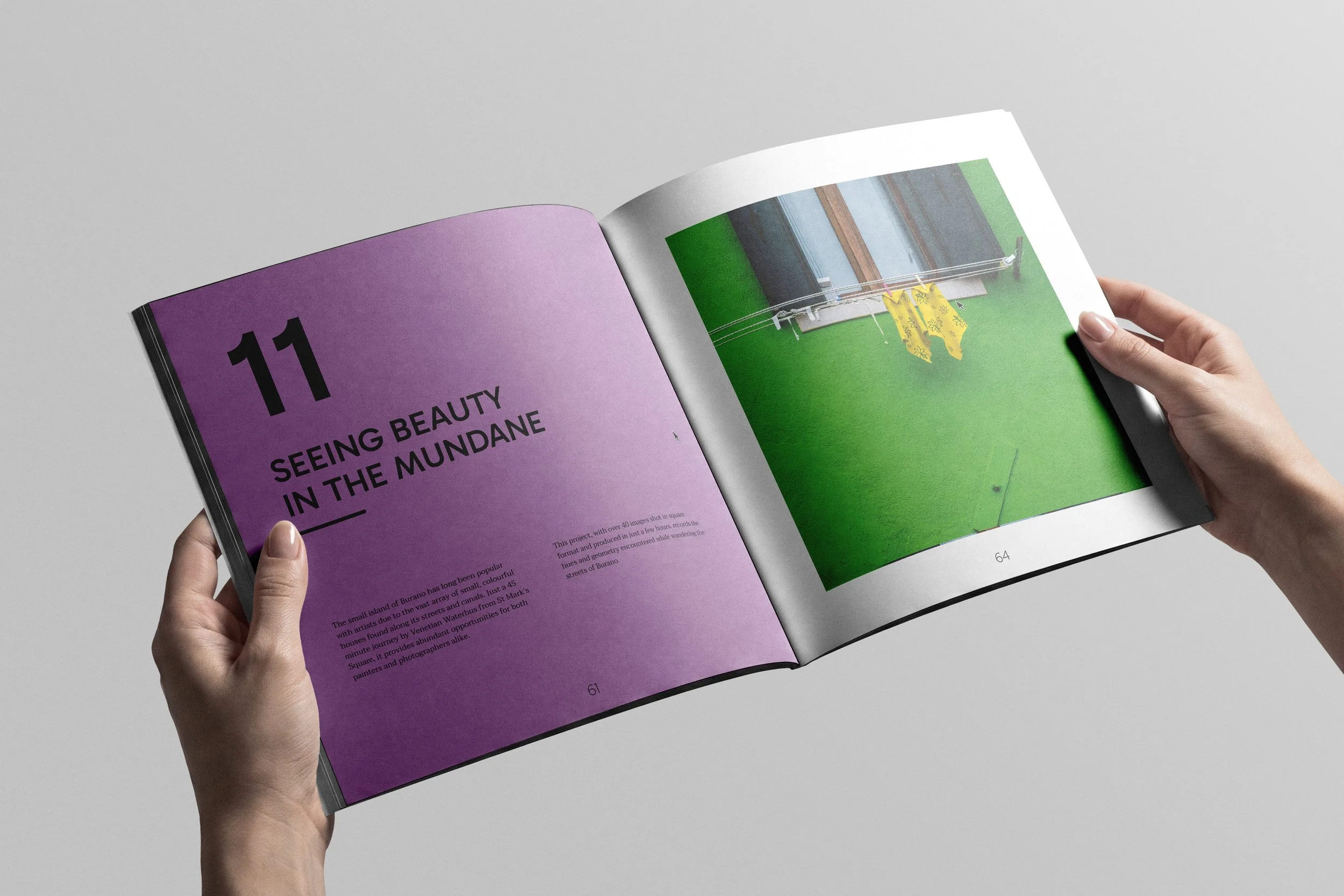
Most photographs now live on screens. We see them on phones, tablets and computers, often for only a few seconds before moving on to the next image. There is nothing inherently wrong with this. Digital photography has made it wonderfully easy to create, share and discover work. But something changes when photographs leave the screen and appear together in a printed magazine.
Print gives photography a physical presence. It encourages us to slow down, look more closely and give a body of work the attention it deserves.
A different way of looking
Social media has become an important place for photographers to show their work. It allows an image to reach a large audience almost instantly and introduces us to photographers from around the world. However, it also encourages a particular way of looking.
We scroll quickly. A photograph appears, catches our attention and is replaced moments later by something else. Even a strong image can disappear almost immediately into an endless flow of new content.
A printed magazine such as KLICK offers a very different experience. It asks the reader to sit down, turn the pages and spend time with the photography.
This slower way of looking can reveal far more. Details that might be missed during a quick scroll begin to emerge. Relationships between people become clearer. Gestures, expressions and small incidents within the image have time to register. The longer we look, the more the photograph tells us.
Photographs begin to speak to one another
One of the particular strengths of a printed magazine is that photographs are not presented in isolation. As soon as one image is placed beside another, a conversation begins.
This is where editing and sequencing become so important. A thoughtful sequence can turn a group of individually strong photographs into something more meaningful. One image introduces an idea, another develops it and a later photograph may change how we understand everything that came before.
The pace of the sequence matters too. Some pages might be filled with energy and visual complexity, while others provide a quieter pause. A single photograph may be given a whole page so that it can stand on its own, while several smaller images may work together to create rhythm or movement.
In a magazine, the space between photographs can be almost as important as the images themselves.
Giving a project shape
For a photographer, seeing work in a magazine can help transform a loose collection of images into a coherent project.
Online, photographs are often shared individually and at different times. Viewers may see one image without knowing that it belongs to a larger body of work. In print, the photographer has the opportunity to present the photographs together and allow their shared ideas to become seen.
This process involves making decisions. Which images are essential? Where should the project begin? What order creates the strongest flow? Which photograph provides a natural conclusion? Perhaps most importantly, which pictures should be left out?
These choices encourage photographers to think beyond whether each photograph is simply good on its own. They must also consider what it contributes to the wider sequence.
A successful magazine feature gives the project boundaries and structure. It provides a beginning, a middle and an end, even when the photographs do not tell a conventional story.
Context without taking away the mystery
Words can also add another layer to printed photography.
A short introduction, article or personal reflection can explain how a project began, where the photographs were made or why the subject matters to the photographer. This context can help readers understand the thinking behind the work and may encourage them to look more carefully.
The words should not explain everything, however. Photography is at its most engaging when it leaves room for the viewer’s own imagination and interpretation.
KLICK aims to find that balance. The photographer is given an opportunity to share the story and motivation behind the work, while the images remain free to communicate in their own way. The writing becomes an invitation into the project rather than a set of instructions telling the reader what to see.
Becoming part of something shared
Having photographs published in a printed magazine can be particularly meaningful. It marks the moment when the work moves beyond the photographer’s own archive or social media account and becomes part of something larger.
The images appear alongside the work of other photographers, articles and ideas. Together, they create a record of the interests, concerns and different approaches found within the photographic community at that time.
For contributors, the magazine becomes a lasting record of their photography. Years later, they can return to it and see not only their own images but also the context in which those photographs appeared.
There is also something special about knowing that other people are holding the magazine, turning its pages and spending time with the work.
A magazine can be rediscovered
Online photographs can quickly become difficult to find. A post that attracted attention for a day or two soon slips down the feed, replaced by newer material.
A printed magazine remains.
It can sit on a shelf, coffee table or desk and be picked up again months or years later. On returning to it, we may notice photographs we overlooked the first time. A project that did not immediately connect with us may suddenly feel more relevant. Our own tastes and understanding change, and the magazine changes with us.
This ability to be rediscovered gives printed photography a longer and more interesting life. A magazine is not necessarily finished once it has been read from beginning to end. It is something to browse, revisit and share.
Over time, a collection of magazines also becomes an archive. It records photographers, projects and ideas that might otherwise disappear into the constantly changing online world.
Making time for photography
Perhaps the greatest value of a printed photography magazine is that it creates time and space for looking.
Digital platforms are invaluable for discovering and sharing photography, but print offers something different. It turns a passing encounter into a more lasting experience.
That is at the heart of KLICK. It is not simply about placing photographs on paper. It is about treating photography as something worth presenting thoughtfully and looking at properly.
In a world filled with images, a printed magazine gives us the opportunity to stop scrolling, turn the page and really see.
You may like this: When does a collection become a project?