
When Does a Collection Become a Project?
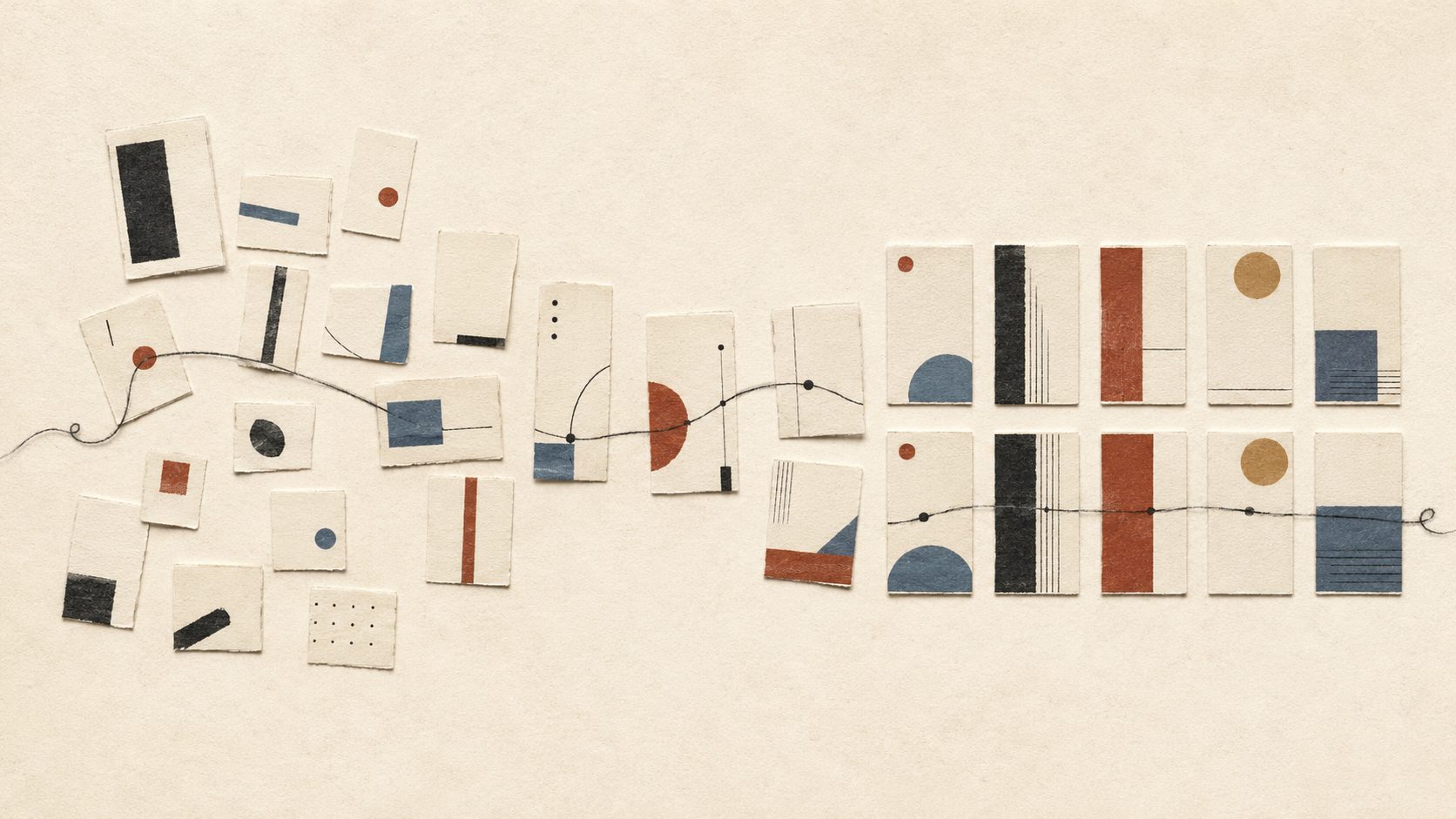
Most photographers gradually build collections of images without necessarily intending to. We photograph the same streets, return to familiar places and repeatedly point our cameras at subjects that attract us. Over time, we may notice that certain ideas, people or visual themes keep appearing in our work.
But when does a collection of photographs become a photographic project?
The simple answer is that it becomes a project when the photographs begin to belong together for a reason.
A collection might consist of pictures taken in the same town, on the same holiday or during a particular period. That gives the images something in common, but it does not automatically make them a project. A folder containing fifty photographs taken in Blackpool is a collection. A carefully chosen set exploring how visitors experience Blackpool’s seafront could become a project.
The difference is intention.
Finding the idea
Some projects begin with a clear idea. A photographer might decide to document a local market before it closes, follow the changing fortunes of a neighbourhood or explore the rituals of people enjoying a day at the seaside.
Other projects emerge much more slowly.
You may look through your archive and realise that you have repeatedly photographed people waiting at bus stops, outside shops, on railway platforms or beside pedestrian crossings. You might find that you are fascinated by the way people use public benches, dress their dogs or become absorbed in their mobile phones.
What appeared to be a series of unrelated photographs may contain the beginnings of a project.
This is one reason why regularly looking back through our work is so valuable. We are often attracted to a subject long before we fully understand why. The photographs may recognise the idea before we do.
Giving the collection a sense of purpose
A project does not need to make a grand statement, but it should have some kind of purpose. What are you interested in, and what are you trying to show?
The answer need not be complicated. It could be as straightforward as wanting to show the humour found in everyday life, the relationship between people and advertising, or how a familiar place changes with the seasons.
Having an idea does not mean that every photograph must say exactly the same thing. In fact, a strong project usually contains variety. There might be humour in one image, tenderness in another and something slightly unsettling in the next. The individual photographs can have different moods while still contributing to the same overall story.
The idea acts as a thread running through the work. It holds the photographs together without forcing them to become repetitive.
Photographing with intention
Once you recognise that you are working on a project, the way you photograph often begins to change.
Instead of simply hoping to find another good picture, you start to notice what the project needs. Perhaps you already have several wide street scenes but very few close observations. Maybe you have photographed the busy daytime atmosphere but not what happens early in the morning or after dark.
The gaps become clearer.
This does not mean working from a rigid shopping list. Street photography depends on uncertainty, and that is part of its appeal. However, having a project in mind can make us more alert to particular situations. It gives us a direction while still leaving room for surprise.
A project can also encourage us to return. One visit may produce a handful of promising photographs, but repeated visits allow us to look beyond the obvious. We begin to understand the rhythms of a place, recognise recurring characters and notice the small details we missed the first time.
The work becomes deeper because our relationship with the subject has deepened.
The importance of editing
A project is shaped as much by the photographs we leave out as by those we include.
This is often the hardest part. We may be fond of a photograph because it was difficult to take, because we remember the day clearly or simply because we think it is a strong image. But being a good photograph does not necessarily mean that it belongs in a particular project.
Each image needs to contribute something.
It might introduce the subject, add information, change the pace, create a question or bring the project to a satisfying conclusion. If two photographs perform exactly the same job, the stronger or more appropriate one will usually be enough.
Editing also reveals relationships between pictures. A gesture in one photograph might be echoed in another. Colours, shapes or expressions may create visual connections. A quiet image can provide breathing space between two busier ones.
When photographs are placed together, they begin to affect how we read one another. The sequence creates an experience that no single image could provide on its own.
Does a project need an ending?
Not necessarily.
Some projects have a natural conclusion. A building is demolished, an event takes place or a journey comes to an end. Others can continue for years. There will always be more people waiting, more seaside visitors and more curious moments on the street.
Even an ongoing project, however, may reach a point where it feels complete enough to share. That might mean selecting twelve images for a website, twenty for an exhibition or forty for a book or zine. You are not declaring that you will never photograph the subject again. You are simply giving one chapter of the work a finished form.
Producing that first edit can be extremely useful. It shows what you have achieved and, just as importantly, what may still be missing.
More than a group of good photographs
A photographic project does not have to be large, serious or completed over many years. It could consist of eight carefully chosen pictures made during a single afternoon. What matters is that the photographs communicate more together than they would separately.
That is perhaps the point at which a collection truly becomes a project: when it is no longer simply a group of individual photographs, but a body of work with its own subject, direction and character.
If you keep returning to the same idea, do not dismiss it as repetition. Pay attention to it. Look through your archive, gather the related images and place them next to one another.
You may discover that the project has already begun.