
Very Modern, Rather Ugly…and Very Martin Parr
Amsterdam has long been my favorite European city. The canals and architecture are reason enough, but for a photographer, there’s another appeal: the museums. Two of them—FOAM and Huis Marseille are devoted entirely to photography, and every August the Nieuwe Kerk hosts the annual World Press Photo exhibition. Between the three, I’m pretty much guaranteed to find something worth seeing whenever I’m in town.
I usually resist checking the exhibition schedules before I arrive. I’d rather walk in and be surprised. This time, I hit the jackpot.
I arrived at FOAM to discover Very Modern and Rather Ugly, an exhibition devoted to Martin Parr, one of the giants of British documentary and street photography, and one of my personal favourites. The exhibition also has the feel of a tribute: Parr died in December 2025, and FOAM presents it as a celebration of the photographer’s legacy.
The title of the exhibit comes from Parr himself. Throughout his career, he said, he tried to photograph “all the things that are very modern and rather ugly.” It’s a perfectly concise description of what made Parr’s work so distinctive. He photographed beaches, supermarkets, fast food, tourists, souvenirs, clothing, leisure pursuits and the increasingly strange rituals of consumer culture. He could take something utterly ordinary, point his camera at it, and somehow make you realize how peculiar it was.
FOAM divided the exhibition into four bodies of work: The Non-Conformists, Common Sense, The Last Resort and Autoportraits. Together they offer only a tiny sampling of a career that produced millions of photographs and roughly 150 books, but they do an excellent job of showing how Parr’s style and technique evolved.
For most of us, Martin Parr means color. Bright, highly saturated, in-your-face color. Which is why the most striking part of the exhibit, for me, was the black-and-white section, The Non-Conformists.
Before Parr became the Martin Parr most of us recognize, he spent nearly fifteen years photographing in monochrome. In the 1970s, after studying photography in Manchester, Parr and his future wife Susie moved to Hebden Bridge, a declining mill town in Yorkshire. For five years, he photographed the community surrounding a local Baptist chapel: its rituals, celebrations, habits and everyday life. The resulting series became The Non-Conformists.
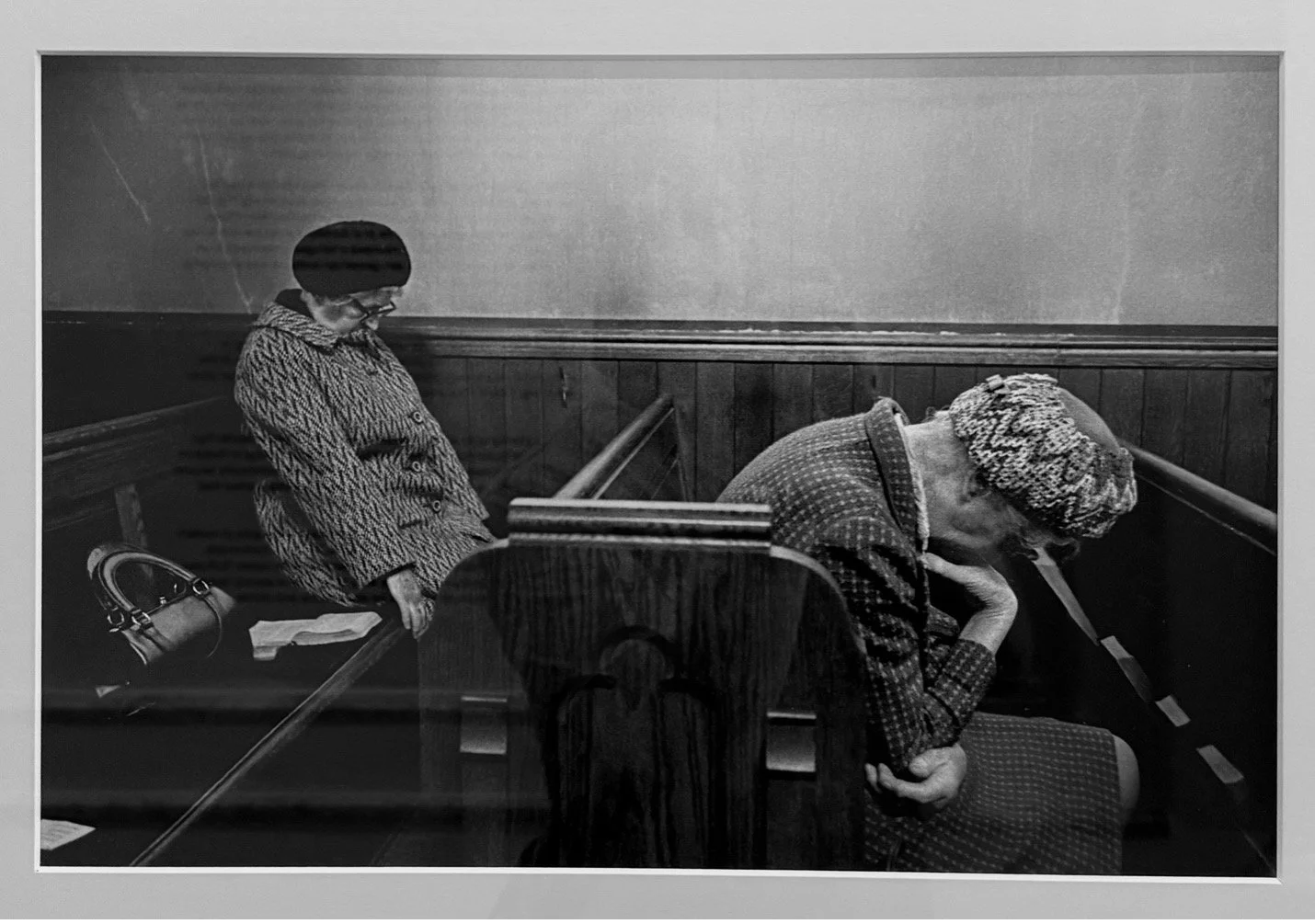
Some of these photographs have the straightforward documentary quality you might expect from the period. But look a little more closely, and lo and behold, there he is. The Parr we know and love. The odd juxtapositions. The visual jokes. The slightly absurd gestures. The ability to spot something faintly ridiculous in an otherwise ordinary scene.
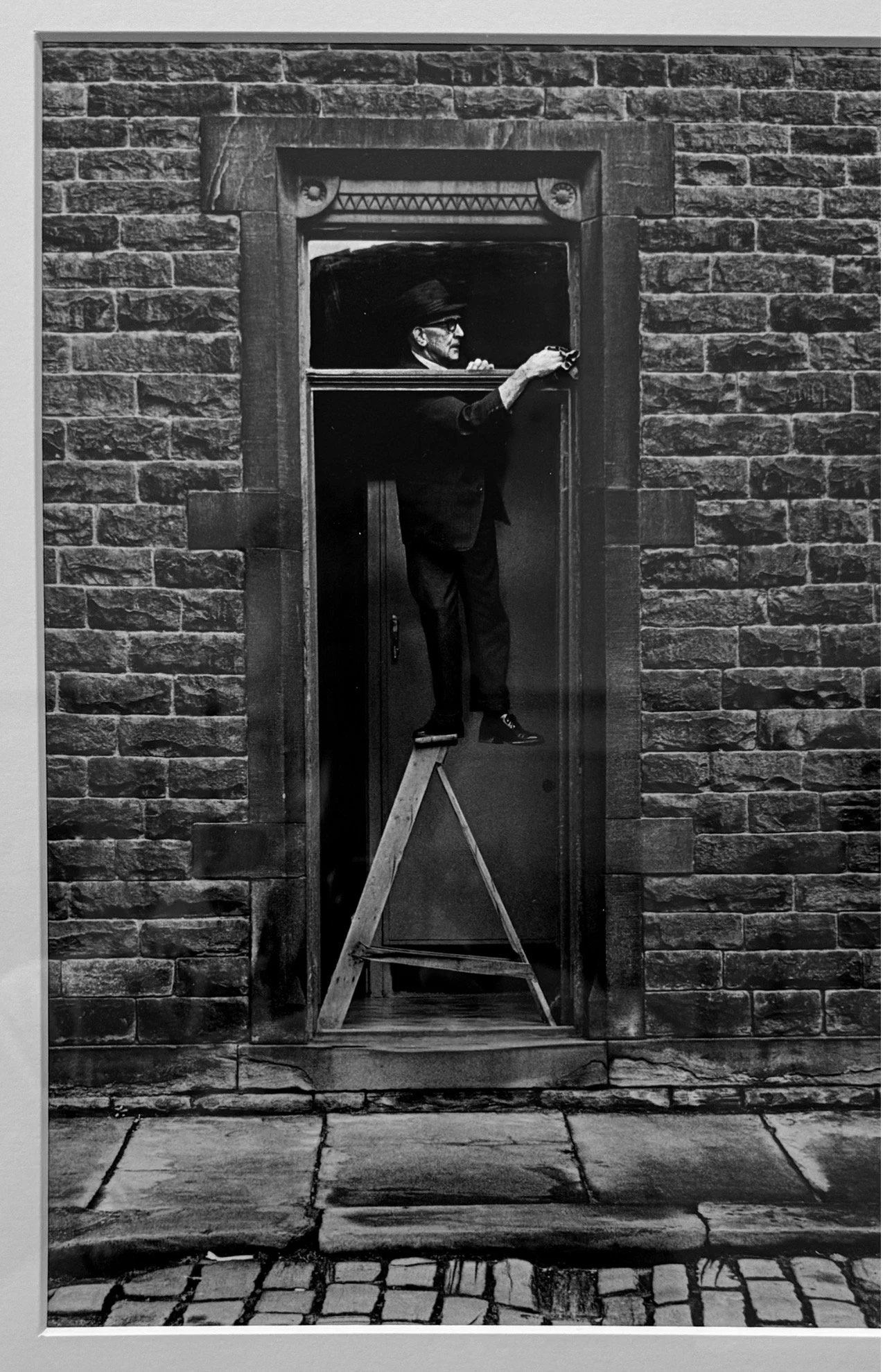
What fascinated me was seeing that his unique sensibility came before the color. Saturated color would eventually become part of his signature, but it was not what made him see the way he did. That was already there. The color just made it more prominent.
What I also saw in those black-and-white photos was his affection for his subjects.
It becomes particularly apparent in The Last Resort, his breakthrough series from the mid-1980s. Photographing working-class families on holiday in New Brighton, a seaside resort near Liverpool, Parr turned his camera toward crowded beaches, sunburned bodies, litter, children, food and the peculiar rituals of the British seaside holiday.
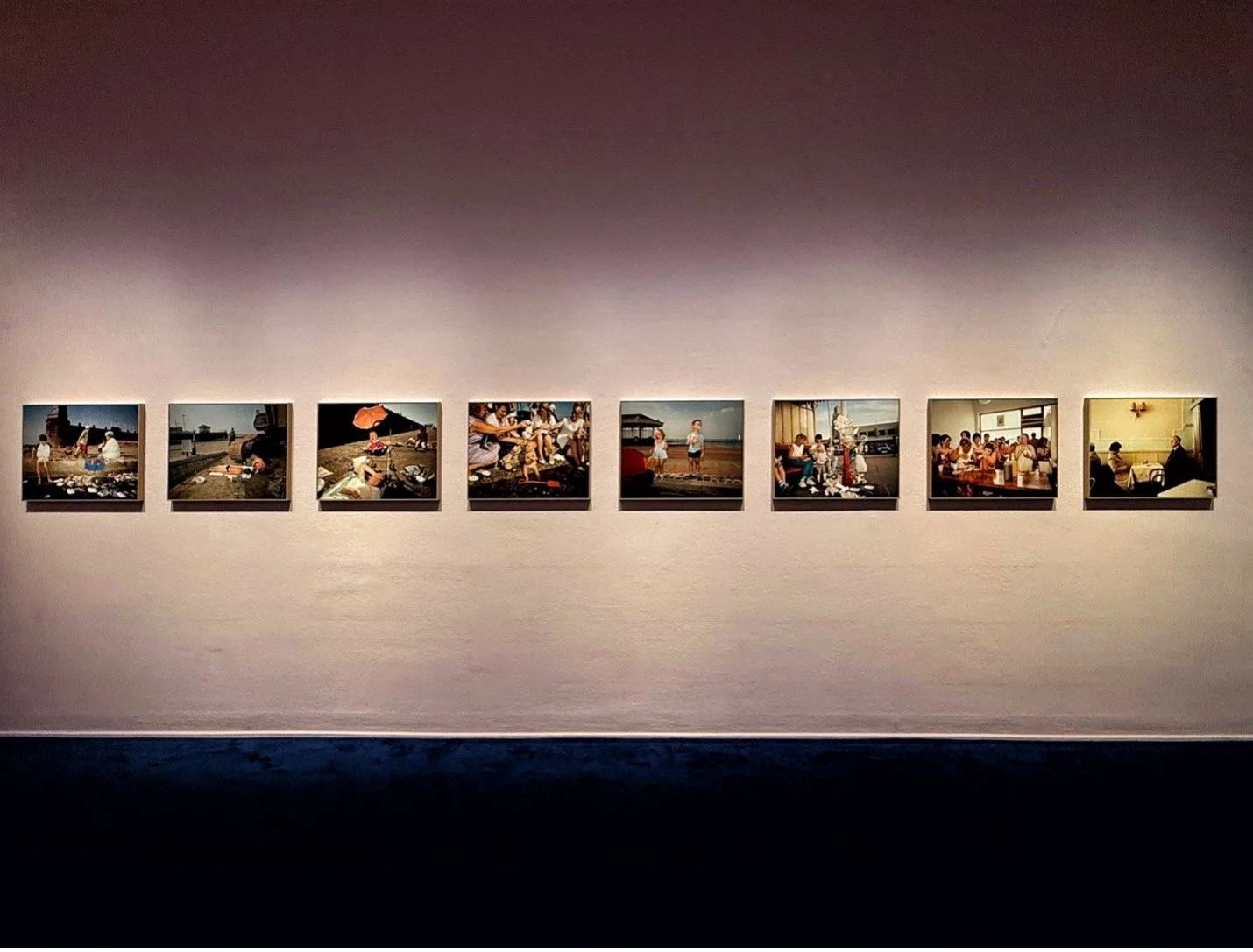
Seeing those photographs lined up across the wall at FOAM, I couldn't help thinking of Klick’s recent seaside issue. Different photographers, different beaches, different intentions, but there is something irresistible about the seaside as a photographic stage. Put human beings near sand and water and apparently we become even stranger than usual.
Parr’s work was blunt. His photographs of British class, consumerism, tourism and leisure are full of social observation, and it has led some critics to accuse him of condescension. But I’ve never found his pictures cruel. He seems amused by human beings rather than contemptuous of them. He includes himself among the ridiculous creatures in his photographs.
The exhibition's Autoportraits section contains self-portraits accumulated over some forty years of travel, but with an interesting twist. Parr generally didn't make the photographs himself. He sought out studio photographers, street photographers and photo booths around the world and paid them to photograph him using whatever peculiar techniques, backdrops and gimmicks they offered. His explanation was characteristically dry: “The only reason I use myself as the subject is because I'm the one person who's consistently there.”
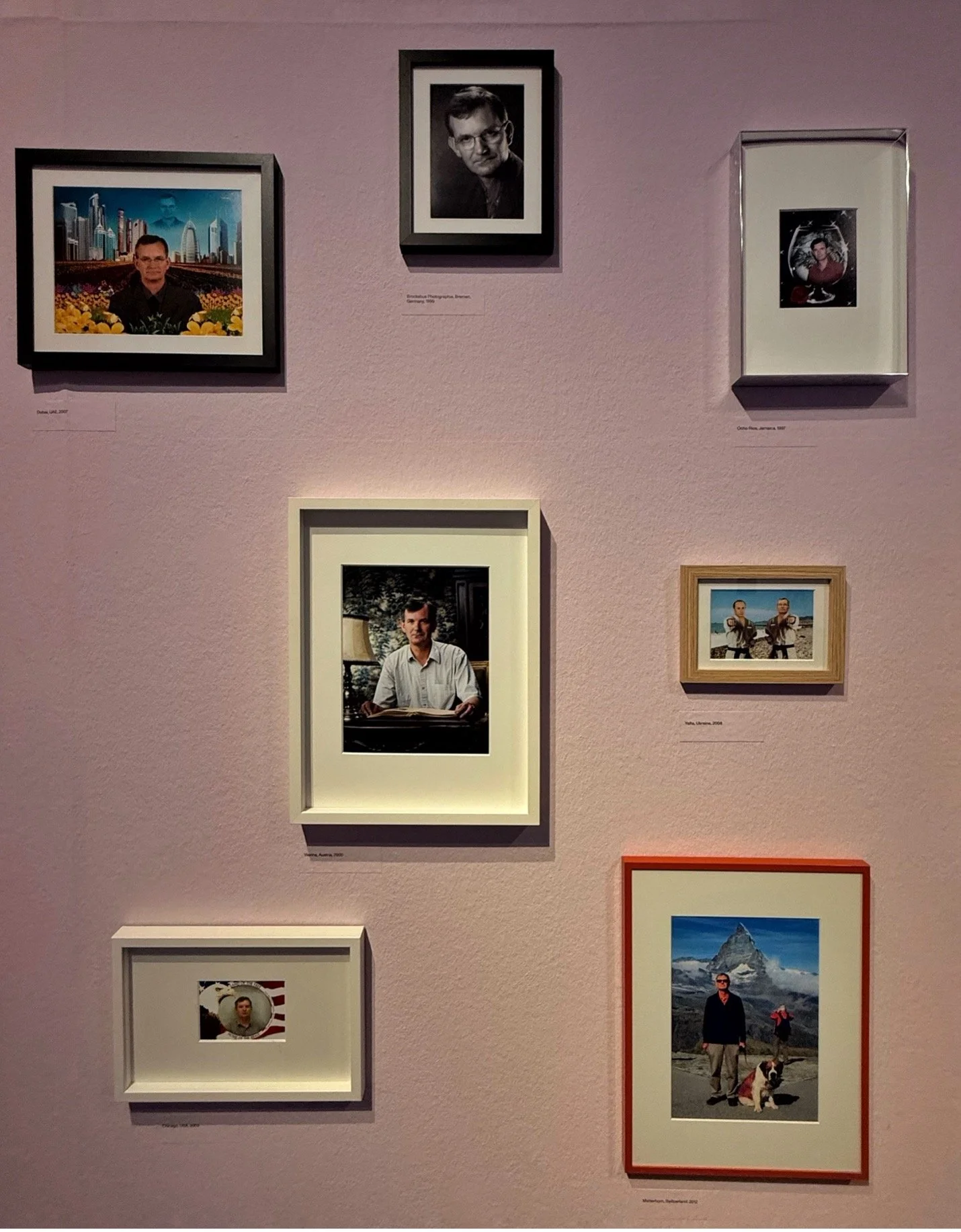
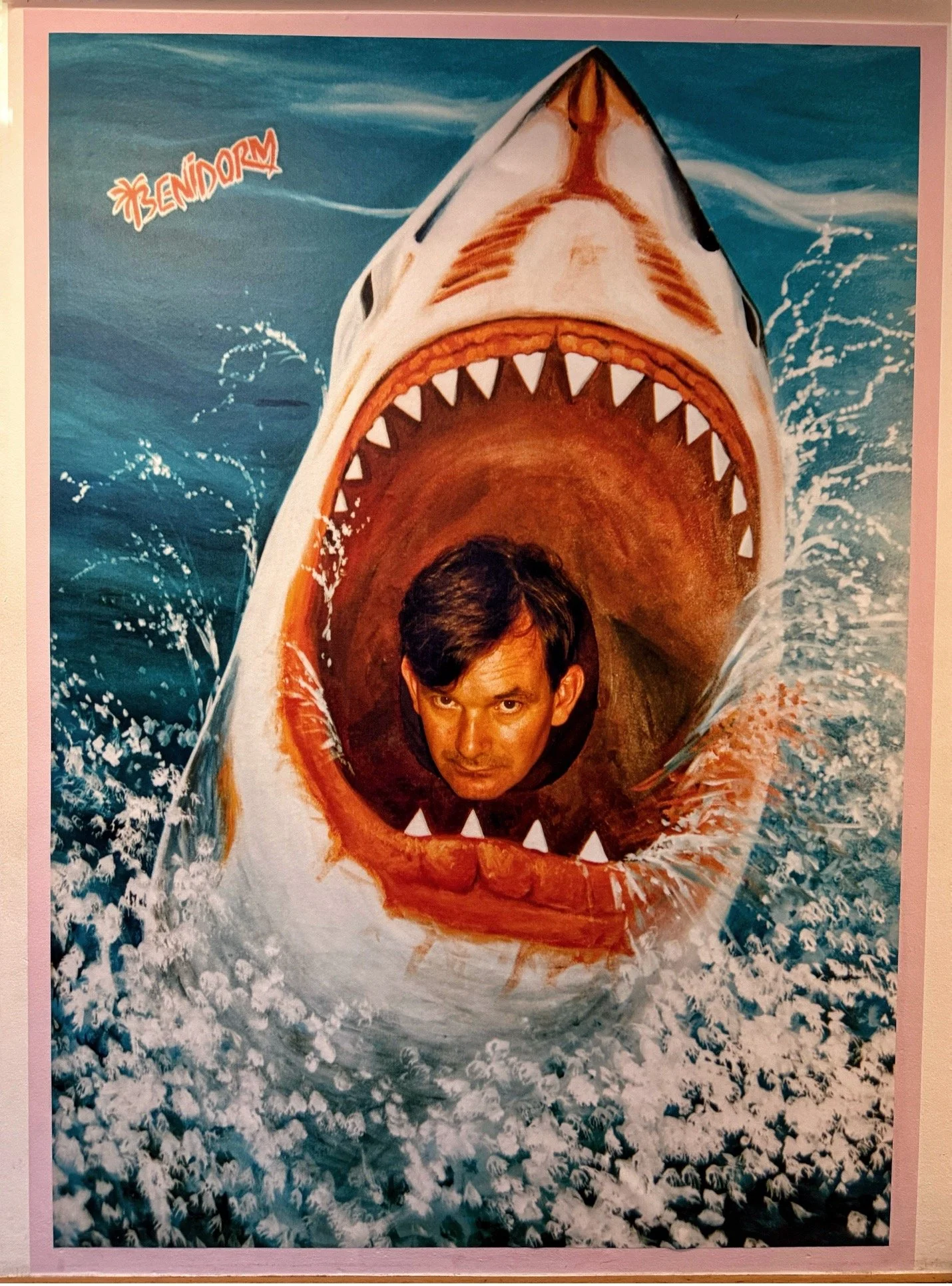
The results are hilarious, but they're also very Parr. The series becomes another examination of photography itself: how we choose to present ourselves, how photographers sell us versions of ourselves, and how photographic technology continually changes the way we perform for the camera.
Which brings us to the most visually striking part of the exhibit, Common Sense. If The Non-Conformists and Autoportraits whisper, Common Sense grabs you by the lapels.
FOAM presents 264 small photographs together across an entire wall, an almost overwhelming barrage of color and consumption. Fast food. Souvenirs. Fashion. Jewelry. Signs. Bodies. Products. Details photographed close-up with harsh flash and intense saturation. Parr made the series in 1999 across Europe, the United States and Japan, deliberately borrowing some of the visual language of advertising while turning it back on consumer culture itself.
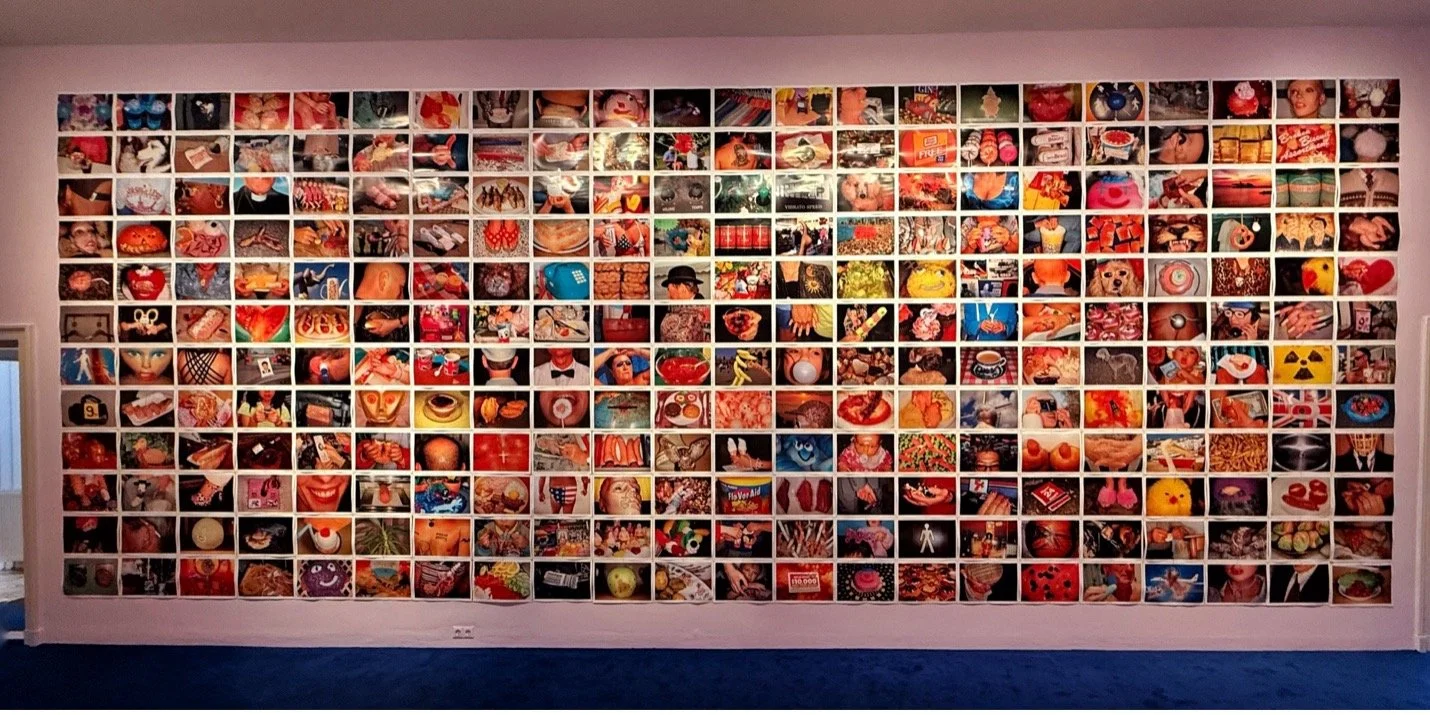
Standing in front of all 264 pictures at once is quite an experience. Individually, many are funny. Collectively, they're borderline horrifying.
I think it’s the food. So. Much. Food.
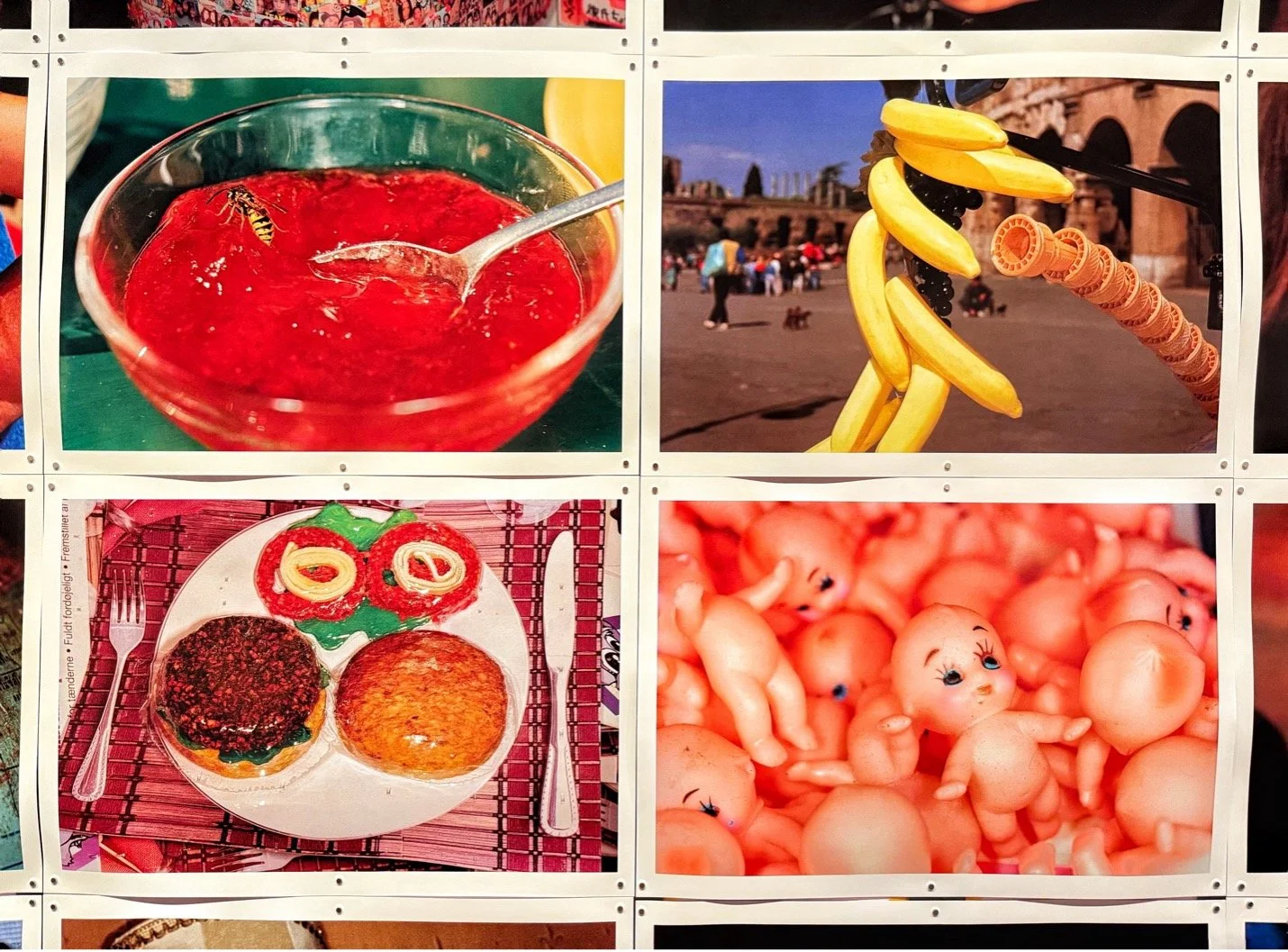
I’ve always associated food with Parr, but I don't think I realized quite how persistent a photographic subject it was until seeing so much of his work gathered together. Melting ice cream, snacks, cakes, sausages, fast food. All of it striking, and much of it rather disgusting. The things we eat become another way Parr examines class, consumption, and excess. After spending enough time in this exhibition, you begin to wonder whether Western civilization can be explained entirely through beaches and snack foods.
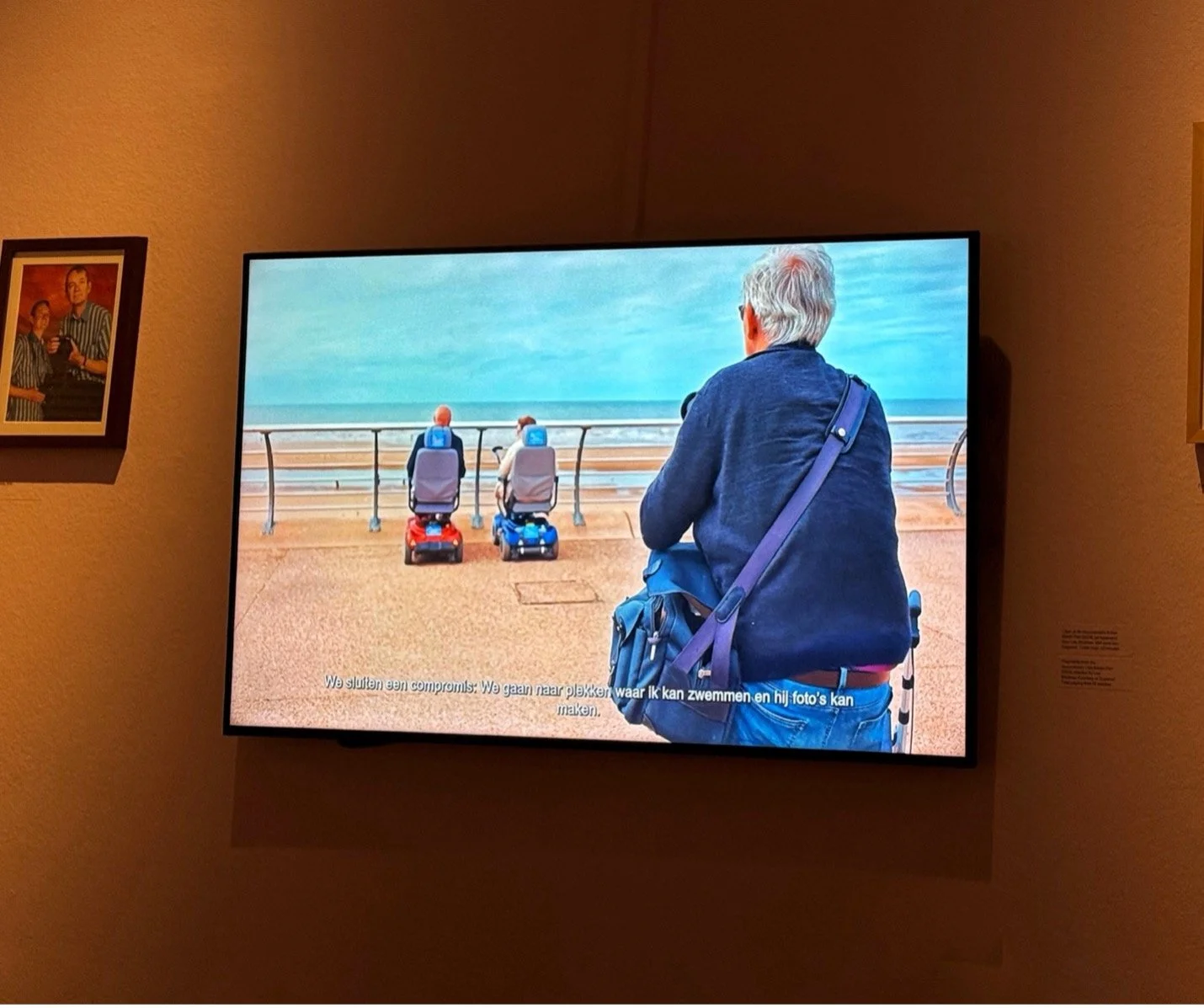
The exhibition rounds out nicely with a 22-minute selection from the documentary I Am Martin Parr in one room, while the adjacent room contains a selection of Parr’s photobooks for visitors to browse. That feels particularly appropriate because Parr was almost as passionate about photobooks as he was about making photographs. He amassed thousands of them, published around 150 of his own, and eventually founded the Martin Parr Foundation in Bristol to house his archive and collection.
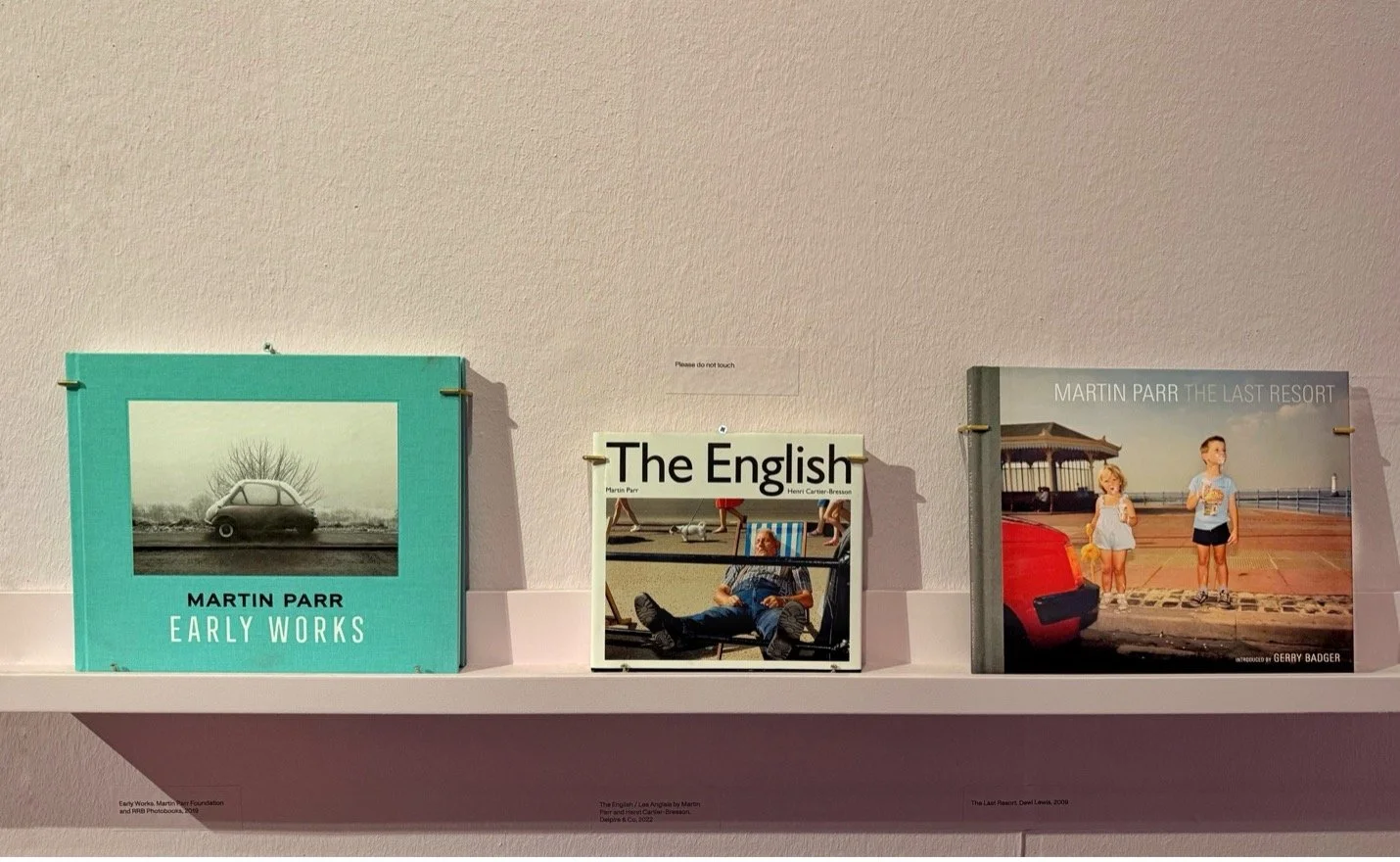
I went into Very Modern and Rather Ugly already liking Martin Parr. I came out appreciating him differently.
The color photographs are still the ones that immediately announce themselves as Parr. They're loud, funny, garish and unmistakable. But it was those quieter early black-and-white photographs that stayed with me. They demonstrated that Parr’s style wasn't really about saturated color or direct flash at all. It was simply about noticing. He noticed how people dressed. How they ate. How they vacationed. How they shopped. How they behaved in public. How they photographed themselves. He noticed the little absurdities embedded in everyday life that the rest of us walk past without a second glance.
For street photographers, perhaps that's the most useful lesson in the exhibition. For Parr, the world was already “very modern and rather ugly”. Fortunately (for him and for us), he noticed.
***
Addendum: While putting together this review, I realized I had neglected to photograph the exterior of FOAM, where the exhibition was announced with an enormous reproduction of one of Parr’s iconic beach photographs. So I went back the following day to remedy that.
As I arrived, a woman was making her way toward the entrance with a walker, not unlike the kind Parr himself often used while photographing the seaside resorts he loved. She was wearing a bright blue blouse, and bursting through its busy pattern was the enormous head of a black cat.
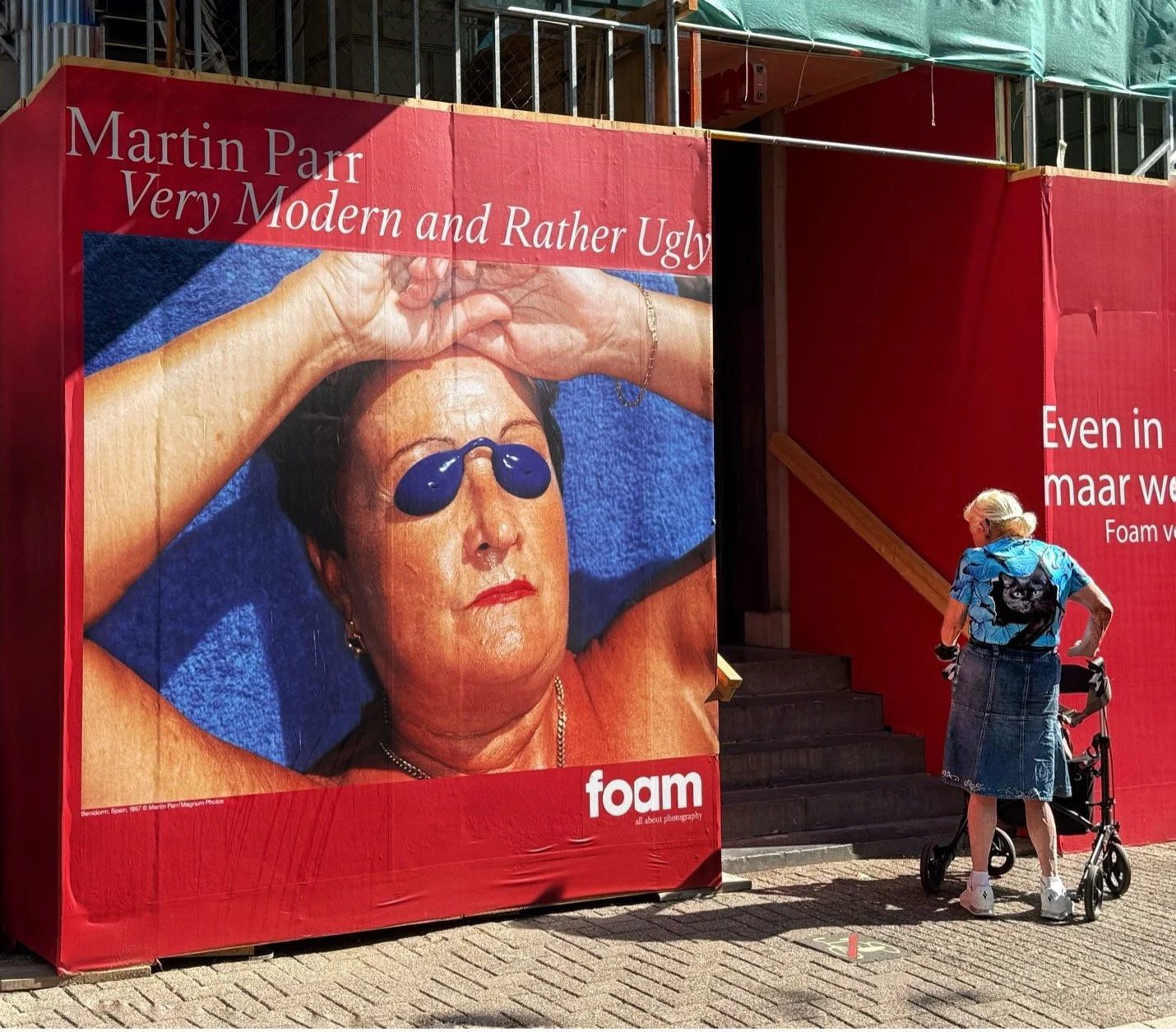
There she was: walker, cat, bright colors, slightly eccentric clothing, all passing directly in front of a giant Martin Parr photograph. I couldn't have staged it better if I'd tried.
Martin would have approved.