
Ed van der Elsken: Chasing Life with a Camera
At the Rijksmuseum, a sprawling exhibition makes the case for one of street photography’s overlooked masters
Most people, when asked to name the greats of street photography, begin with Henri Cartier-Bresson and then rattle off the usual suspects: Garry Winogrand, Joel Meyerowitz, Martin Parr, Saul Leiter, Bruce Davidson, Vivian Maier, Daido Moriyama, and whatever other personal favorites belong on their list.
I rarely hear anyone mention Ed van der Elsken.
He is on my list. After seeing Ed van der Elsken. Up Close, the Rijksmuseum’s extensive exhibition devoted to his life and work, he has moved considerably higher on it.
I can’t remember exactly when I first encountered van der Elsken. I think it may have been at a book fair here in Amsterdam, or perhaps in the gift shop at Huis Marseille, one of the city’s photography museums. What I do remember is the immediate impact of the photographs: gritty, high-contrast black-and-white, not unlike Moriyama, although without quite so much grain. And people. Lots of people.
People on the street. Revelers. Young people. Old people. Respectable citizens and decidedly less respectable ones. Some unaware of the photographer, some looking directly into his lens. Some amused by him. Others clearly annoyed. And behind them, unmistakably, Amsterdam.
I didn’t buy the book I was looking at that day, something I’ve regretted ever since. But a few years later, at the weekly book market in Amsterdam’s Spui, I found sealed copies of a small van der Elsken book called Feest (Party), a project he had worked on around 1961 but which wasn’t published until after his death in 1990. At a mere ten euros, buying it required approximately three seconds of deliberation.
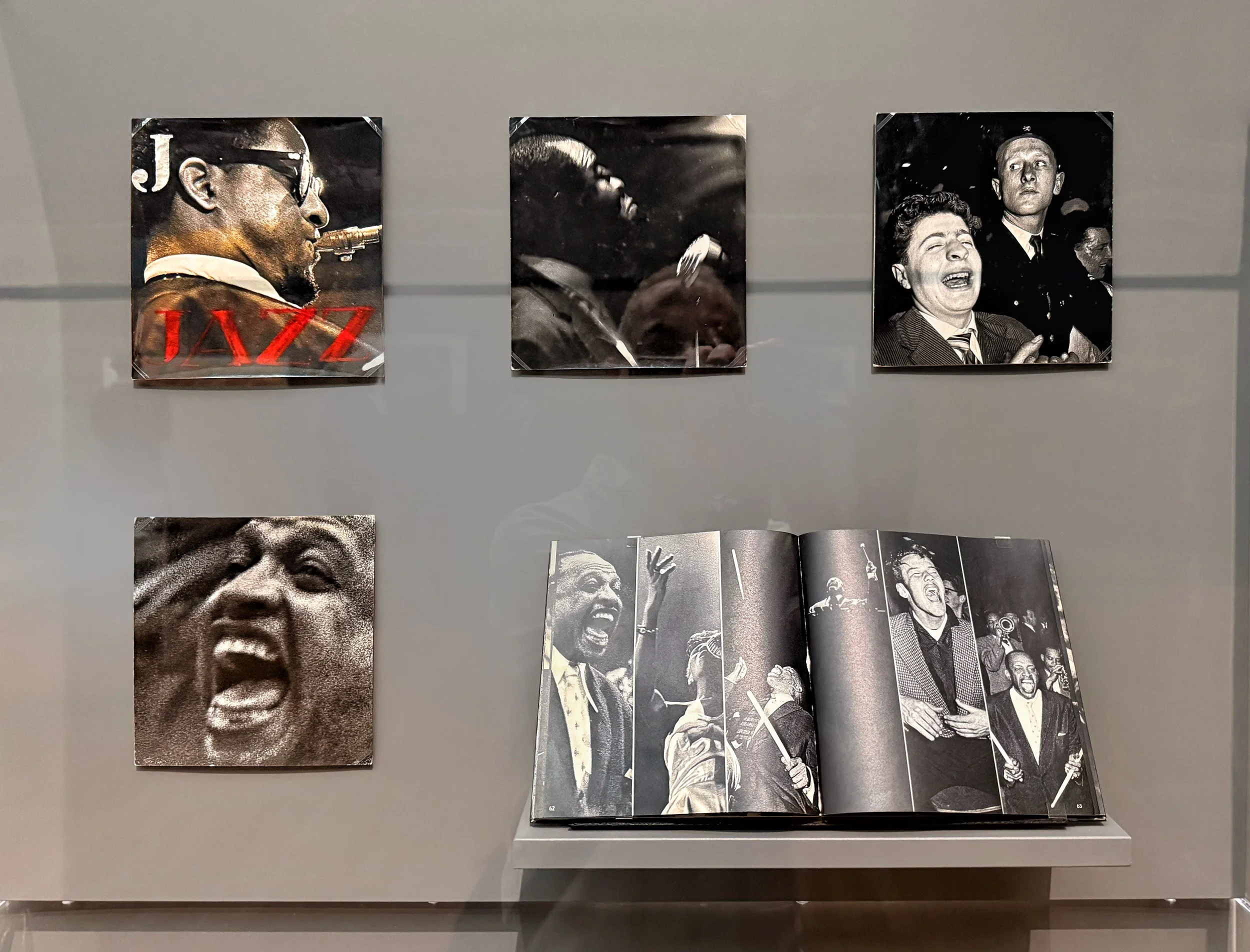
A few years later, in a used bookstore, I found Jazz, his wonderful little 1959 book of photographs taken at jazz concerts in the Netherlands. The images of the musicians are terrific, but I found myself equally fascinated by his photographs of the audiences: faces of devoted jazz fans completely absorbed by what was happening onstage.
I’ve returned to both books repeatedly, sometimes for pleasure and sometimes for inspiration.
So, during my annual stay in Amsterdam this summer, I was delighted to discover that the Rijksmuseum was mounting an exhibition of van der Elsken’s work. What I wasn’t prepared for was its scale.
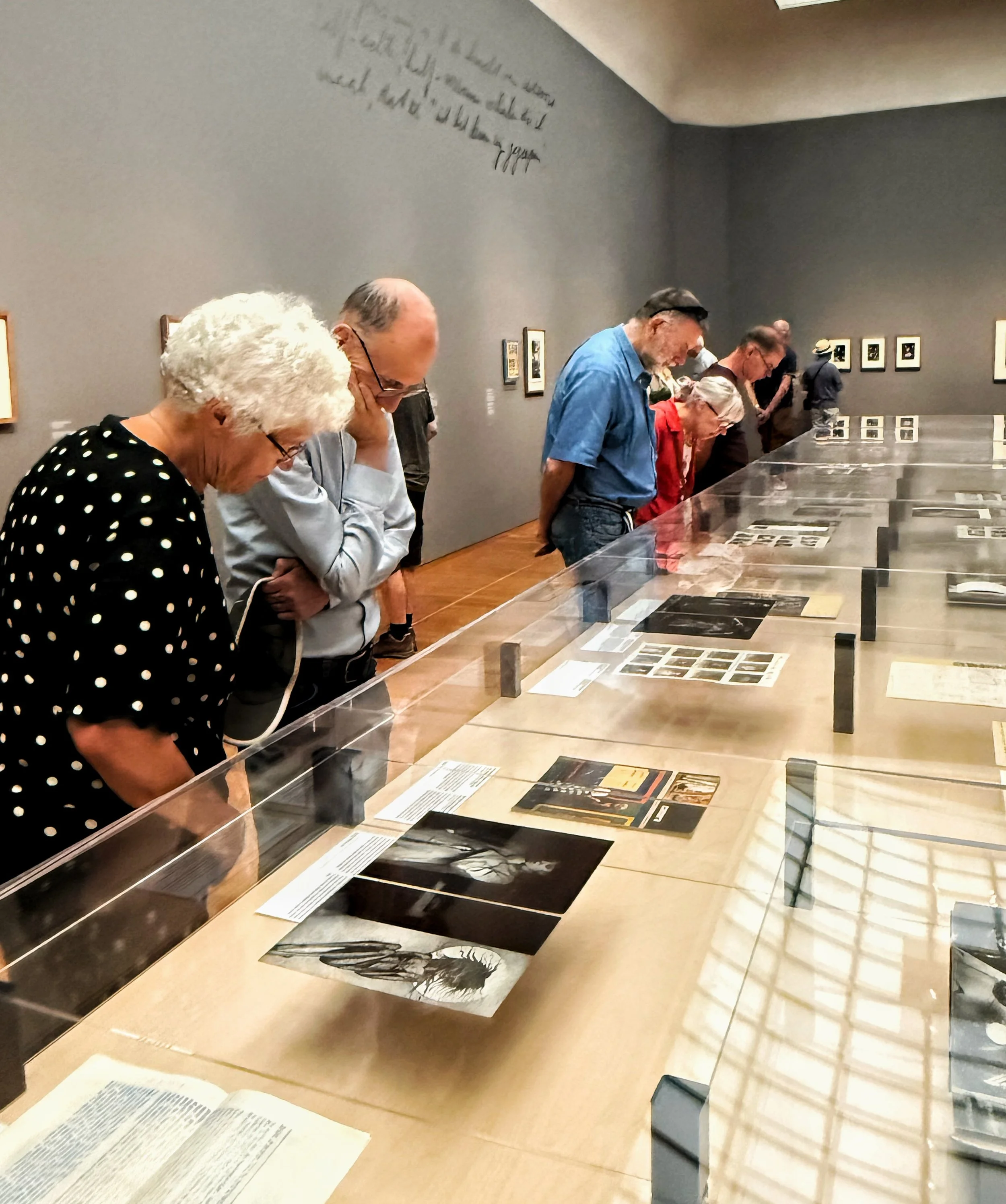
Nine galleries, including two enormous rooms, filled not only with photographs but also with books, films, contact sheets, sketches, experimental prints and working materials. Rather than simply showing us what van der Elsken produced, the exhibition lets us watch him figure out how to produce it.
The Photographer Is Definitely Here
One film at the very start of the exhibition shows van der Elsken photographing people at a livestock market in Purmerend. I could have watched it all day.
So much for the stereotypical street photographer trying to remain invisible. Van der Elsken is right there in the middle of everything, smiling, talking, joking with people, asking for people to let him photograph them, and occasionally directing his subjects. At one point he tells a market-goer to take a bite of his sandwich. He looks positively delighted.
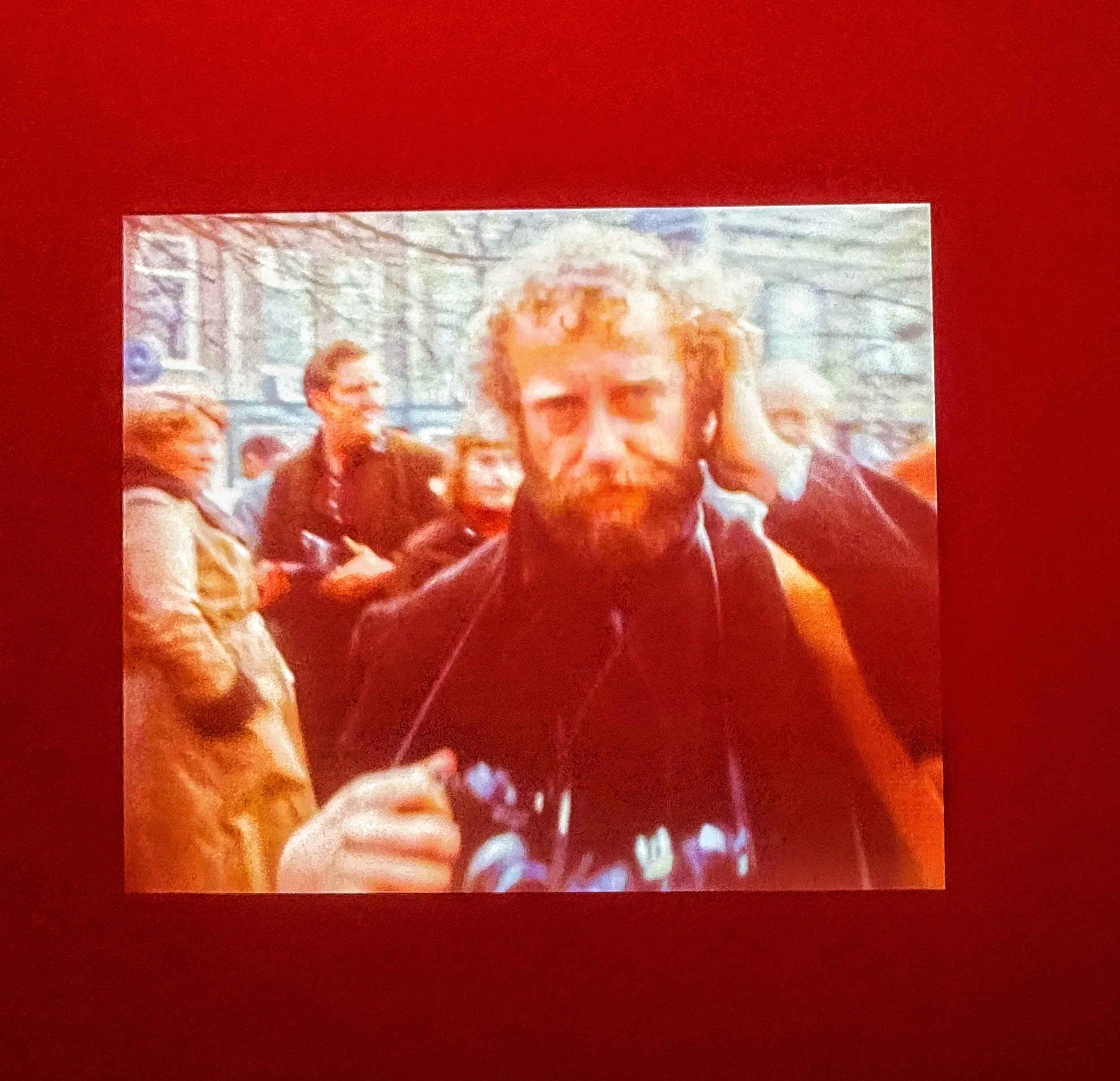
Sometimes he photographed from a distance without being noticed, but very often van der Elsken wanted the encounter. He wasn’t merely observing life; he was inserting himself into it.
That attitude seems to have been there almost from the beginning. As a young photographer in Paris, he discovered fairly quickly that conventional photojournalism and commissioned work weren’t what interested him. He wanted to wander. He wanted ordinary people and strange people and subjects others might consider ugly or unworthy of being photographed. And he experimented relentlessly with perspective, movement, framing and contrast to turn those subjects into something distinctly his own.
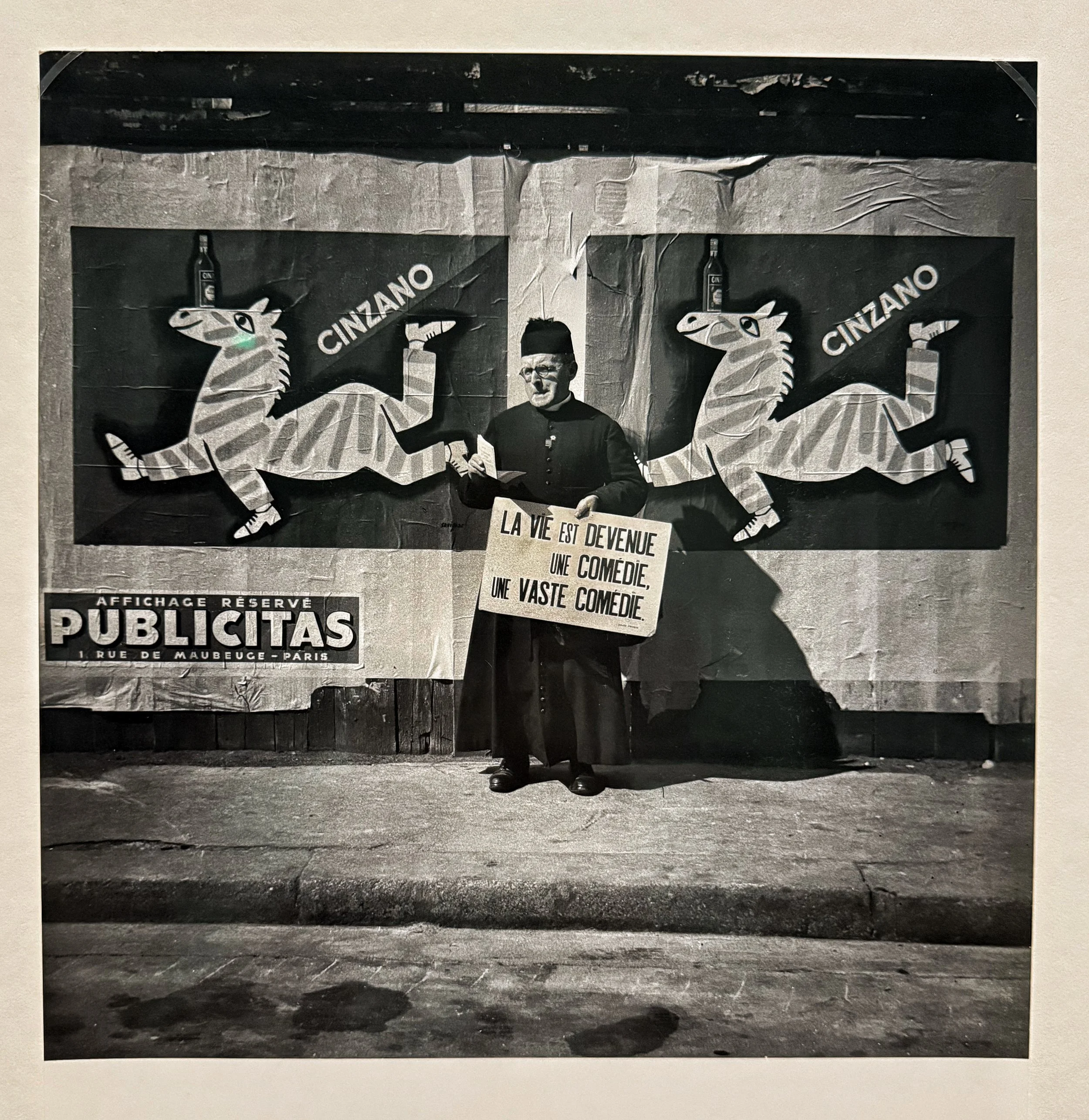
There is a wonderful early photograph of a priest standing in front of an advertising poster while holding a sign proclaiming that life has become “one great comedy.” Van der Elsken loved these accidental juxtapositions and sometimes treated words encountered on the street almost as captions supplied by life itself. To me, it’s a remarkably contemporary approach.
So is the way he worked a scene. Contact sheets reveal him waiting for something to happen in front of a particular background, moving around a subject, or pursuing someone down the street. Street photographers sometimes talk about hunting and fishing. Hunters actively roam the streets looking for a photograph. Fishers find the stage first—a background, a shaft of light, an interesting juxtaposition, and wait for the right person to wander into the frame and complete it. Van der Elsken was fond of both. And occasionally he went one step further and put himself into the picture. He wasn’t waiting reverently for Cartier-Bresson’s decisive moment. Sometimes he went out and prodded the moment until it gave him something.
Making the Photograph After Taking It
The exhibition also demolishes another romantic notion about photography: that everything important happens when the shutter is pressed. For Van der Elsken, the negative was raw material.
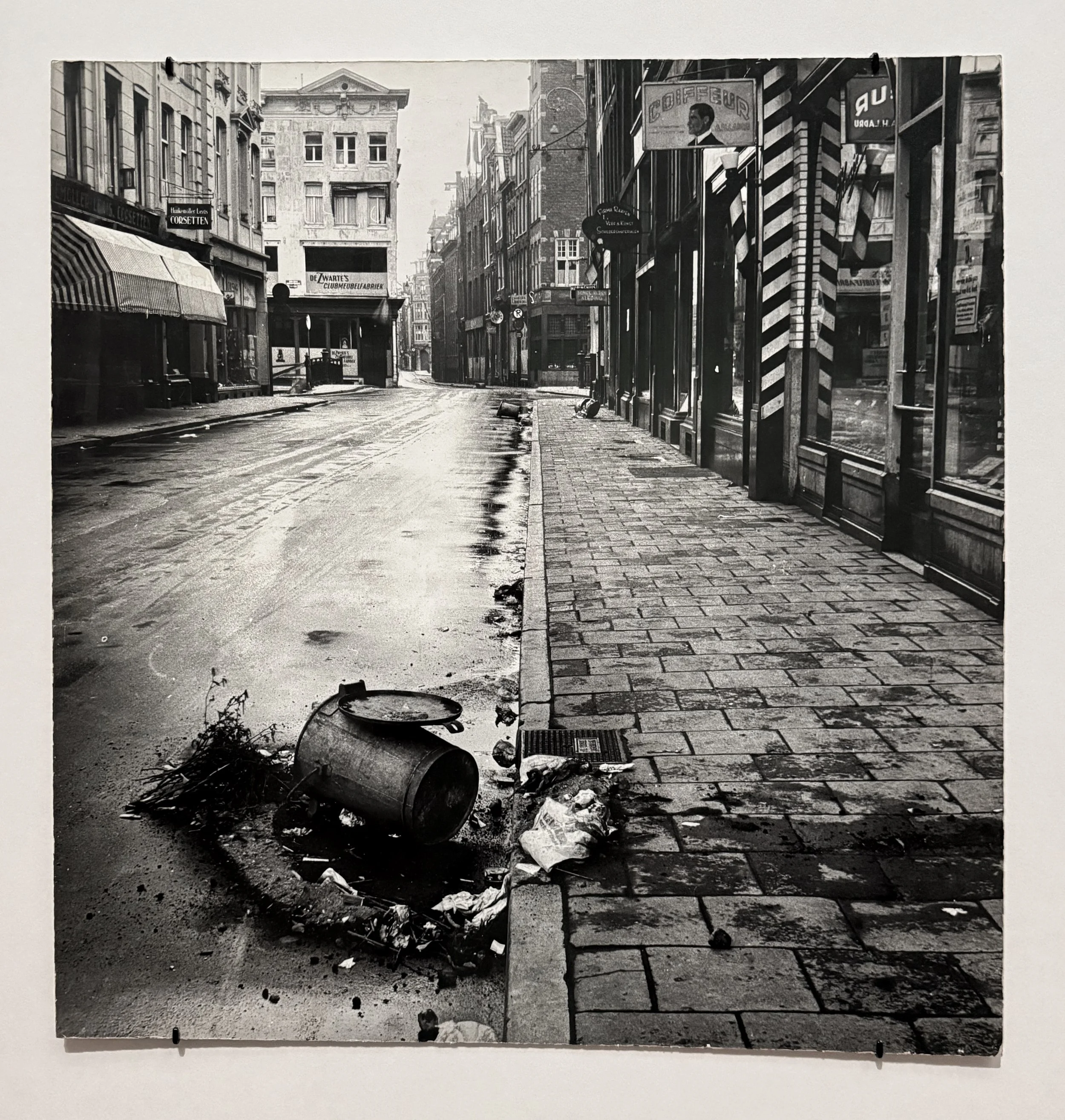
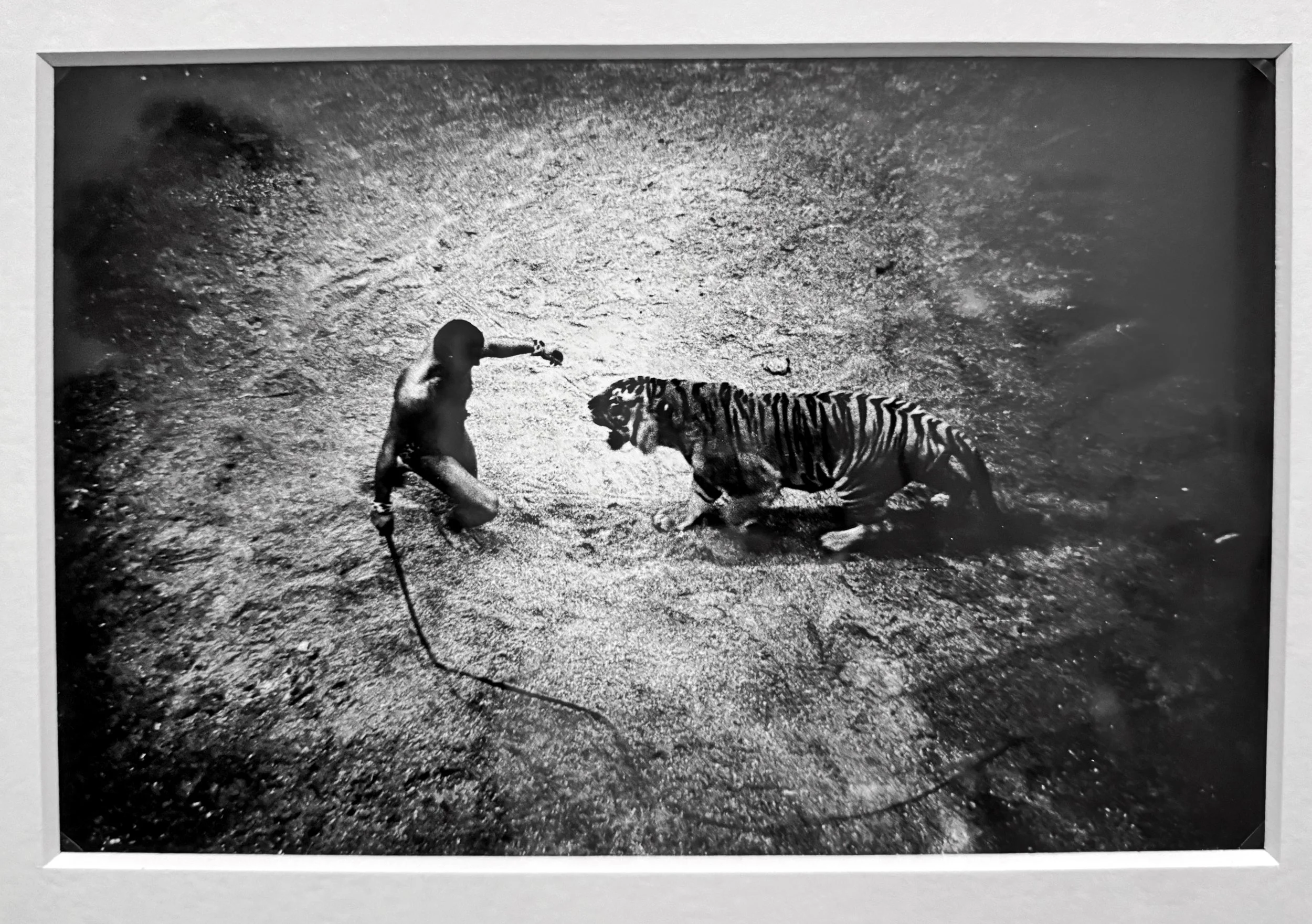
He cropped aggressively. He dodged and burned enthusiastically. He changed emphasis. He eliminated distracting elements. He sometimes transformed a fairly conventional negative into something much more dramatic in the darkroom.
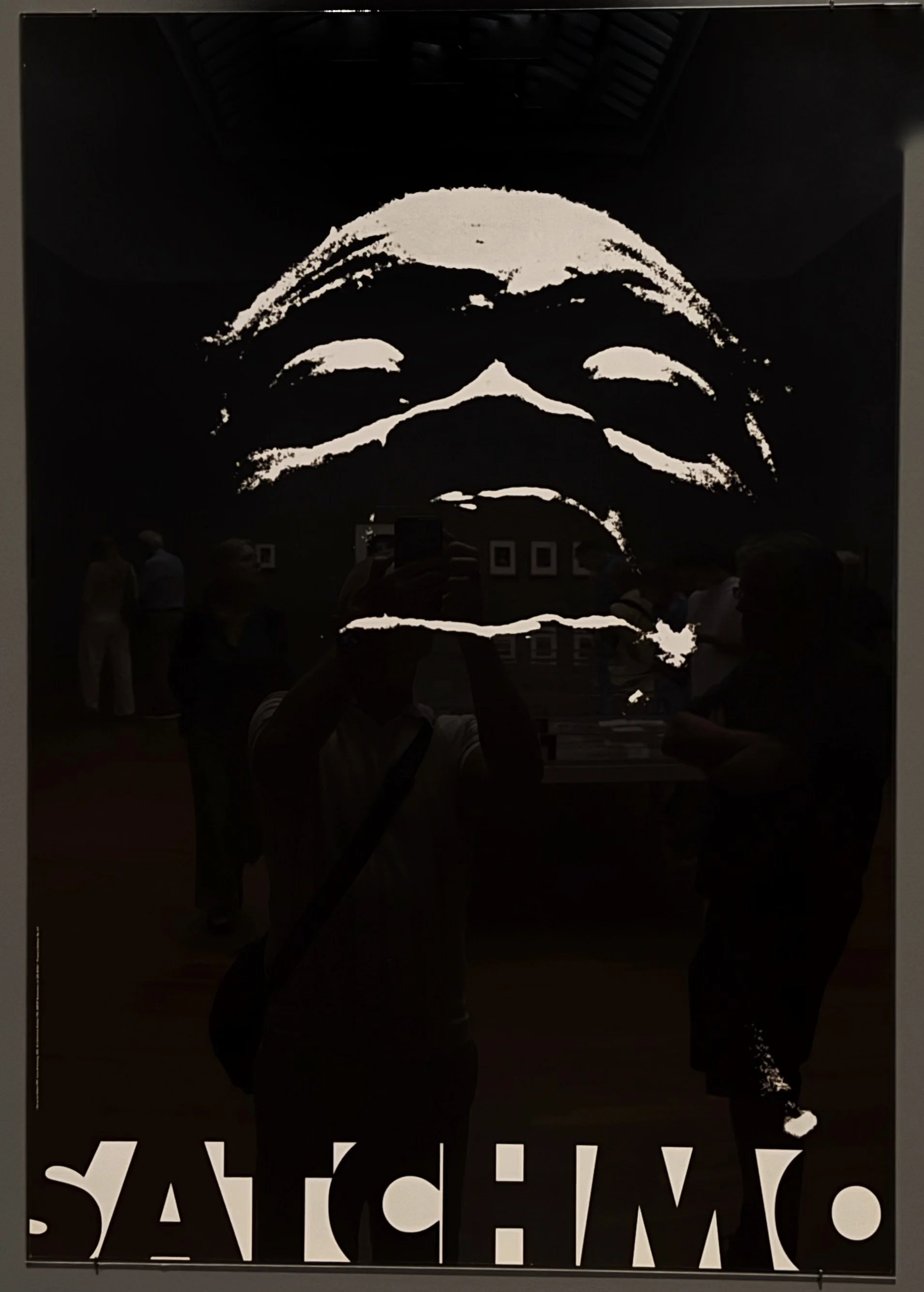
His famous portrait of Louis Armstrong is a spectacular example. The original negative contained microphones, Armstrong’s white shirt, singer Velma Middleton and other contextual information.
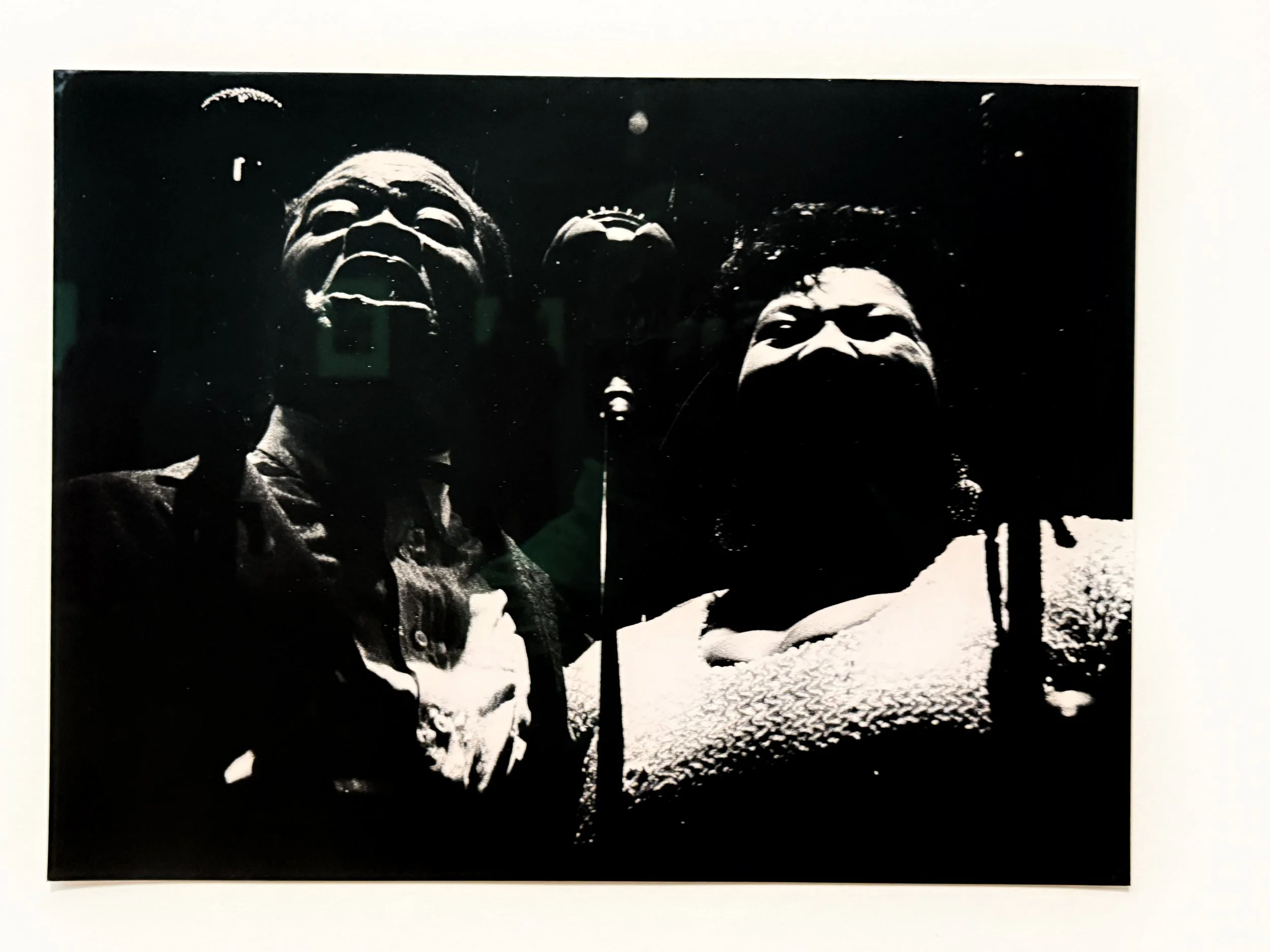
Van der Elsken discarded almost all of it. Through radical cropping and darkroom work, he reduced the image essentially to Armstrong’s illuminated face emerging from darkness.
Elsewhere he turned an overturned garbage can in Amsterdam’s Oude Doelenstraat into something almost monumental through composition and perspective.
In a photograph of a tiger tamer at Carré, burning and dodging intensified the confrontation between man and animal.
It’s a useful reminder, particularly at a moment when some photographers have become moralistic about post-processing, that one of photography’s great practitioners was not terribly interested in preserving an untouched negative. He was interested in the finished photograph, and he did what was necessary to achieve it.
Photographs That Become Stories
Van der Elsken also thought beyond individual images. He thought in sequences. His breakthrough book, Love on the Left Bank, published in 1956, used documentary photographs of young bohemians in Saint-Germain-des-Prés to construct a partly fictional narrative. At a time when photography was still largely expected to describe reality, van der Elsken was rearranging it into what amounted to a photographic novel, one of the first of its kind. The Rijksmuseum exhibition is particularly good at revealing this process.
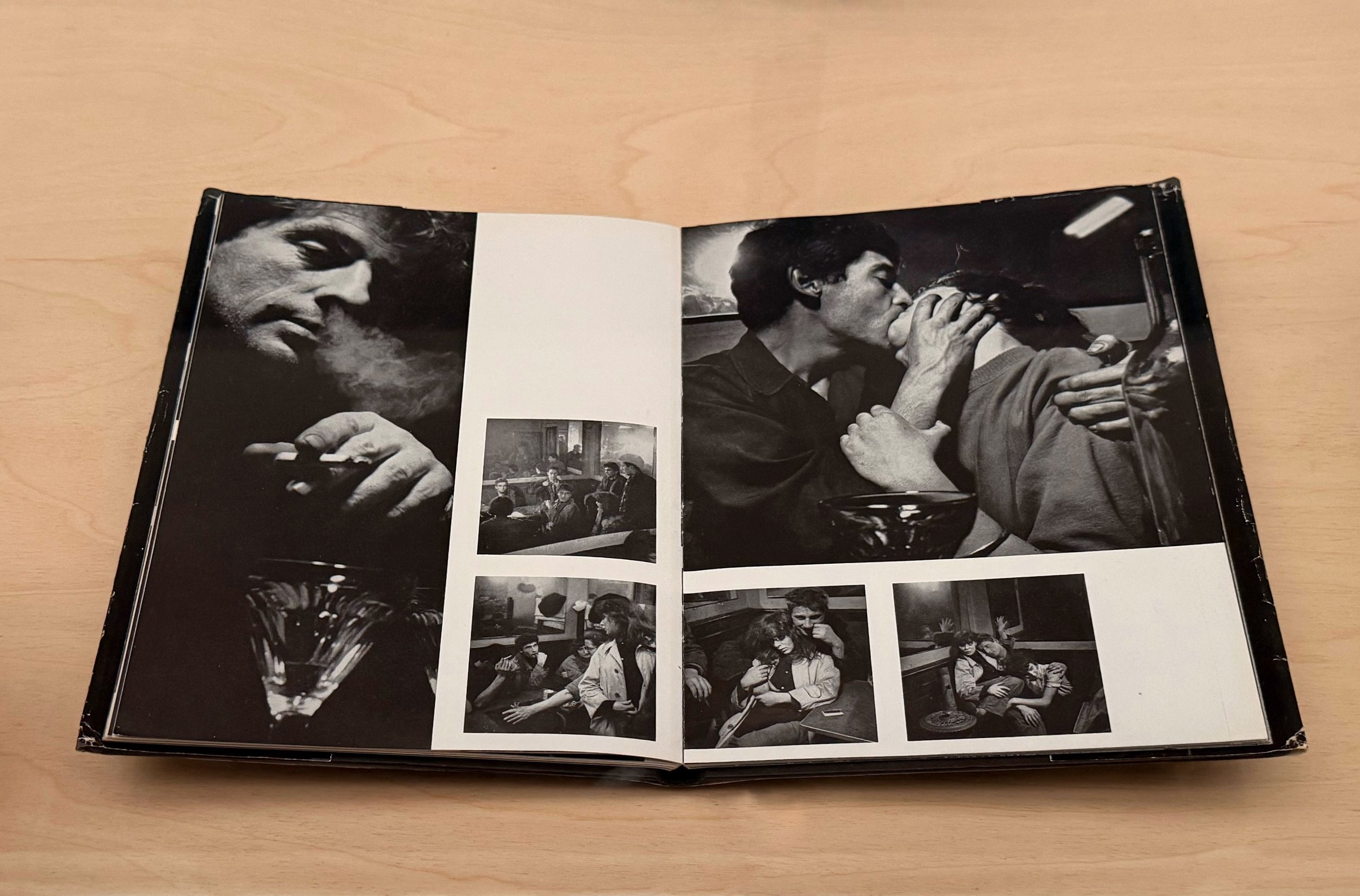
There are book dummies, sketches, alternate layouts and different crops of the same negative. You can see him trying one sequence and then another, putting pictures together, pulling them apart and discovering what happens when two images share a page.
His little book Jazz is fascinating in its construction. Its experimental layout was designed around the rhythm and emotion of the music itself. One display shows three different photographs of an audience at an Ella Fitzgerald concert, or rather, what appear to be three photographs. They’re actually three different crops from the same negative, each crop shifting our attention to a different person.
Like many photographers, I hope to eventually produce a book of my own, although the mere thought seems daunting. Seeing how van der Elsken agonized over the sequencing of the photos for his books is reassuring.
Sweet Life
Perhaps the exhibition’s richest example of this process is Sweet Life, the book that grew out of an extraordinary fourteen-month journey van der Elsken made with his partner Gerda van der Veen beginning in 1959.
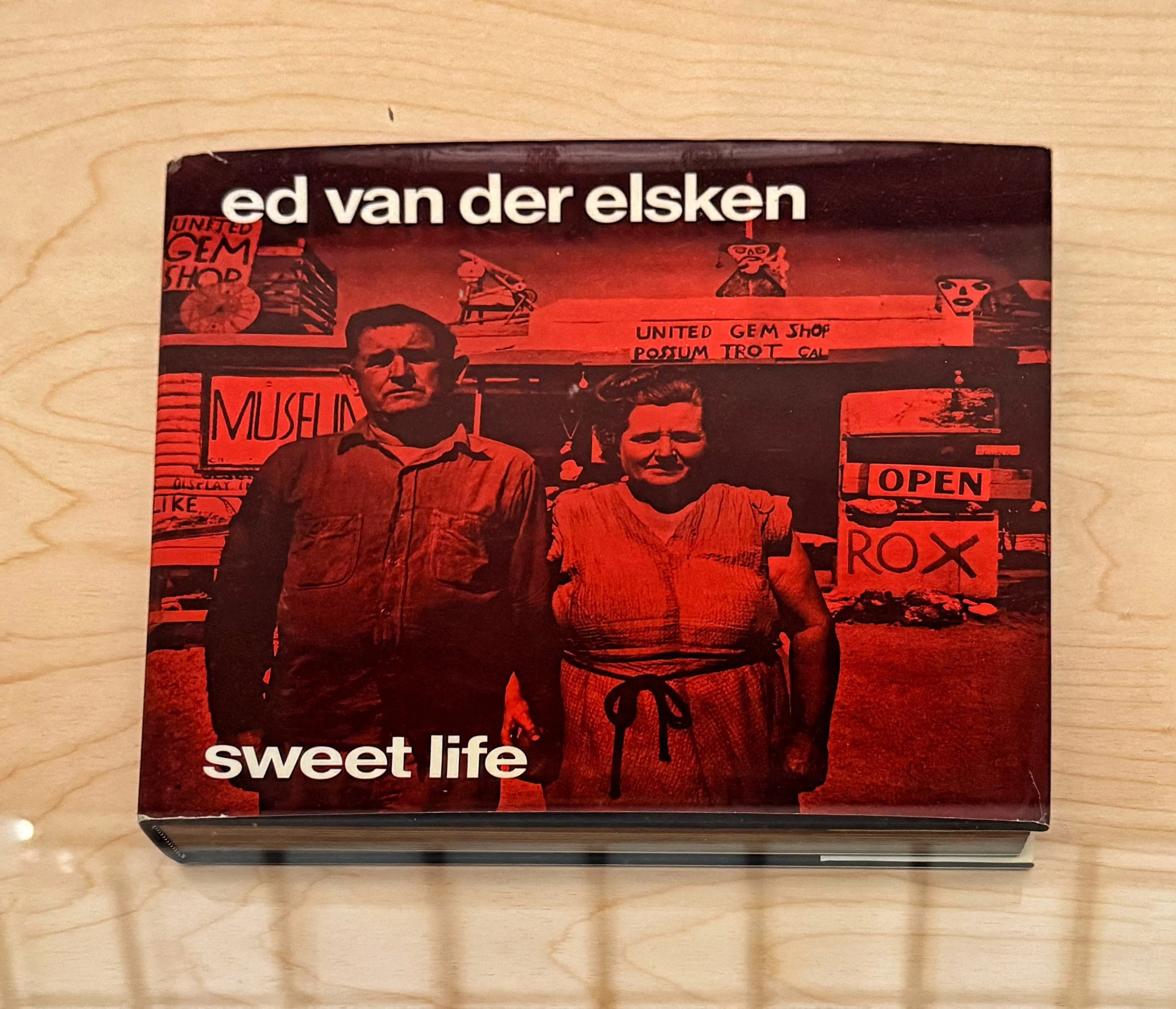
They traveled by freight ship, automobile and airplane through parts of Africa and Asia, the United States and Mexico, producing magazine and television work along the way. The eventual book combined his fascination with ordinary life, his highly expressive printing and increasingly adventurous ideas about book design. Today Sweet Life is considered one of his major achievements. At the time, however, nobody wanted to publish it. It took him more than five years, and multiple book refinements, to find a publisher.
One of my favorite parts of the exhibition shows van der Elsken working out the book’s structure. He originally hand-lettered chapter headings for the different countries and continents. I loved his calligraphy and was slightly disappointed to discover that it didn’t survive into the finished book.
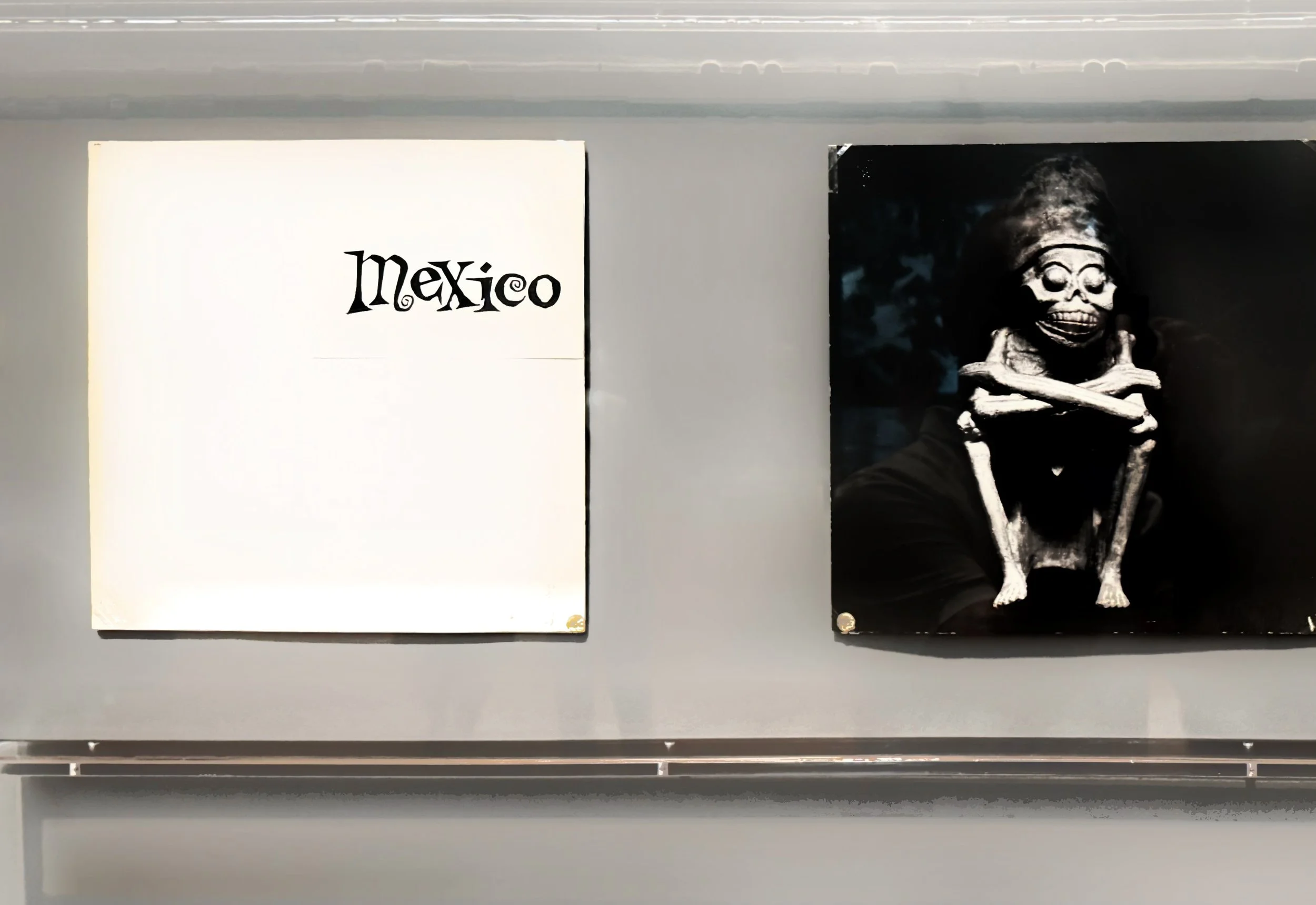
More important, however, is why the geographical chapters disappeared. Van der Elsken ultimately decided to weave the photographs into one continuous sequence rather than neatly separating humanity by country. The underlying idea was simple: wherever we happen to live, we are all human.
That immediately brought to mind Edward Steichen’s landmark 1955 exhibition The Family of Man at New York’s Museum of Modern Art. (I finally bought a copy of the book of that seminal exhibit just last year, and am still feeling its impact.) Steichen assembled more than 500 photographs from around the world into a sprawling photographic essay built around the experiences people share – love, childhood, work, conflict, death—rather than the national borders that separate them.
And the connection may be more than coincidental. I grabbed my copy of The Family of Man and sure enough, Van der Elsken himself had been included in it. In fact, I discovered that Steichen had already included 18 of his photographs in MoMA’s Postwar European Photography exhibition two years earlier, in 1953.
I couldn’t help wondering whether The Family of Man, appearing only a few years before van der Elsken began his travels for Sweet Life, had stayed somewhere in his mind when he ultimately decided that his own photographs shouldn’t be divided according to geography. Did Steichen influence that decision? I don’t know, and the exhibition makes no such claim. But given van der Elsken’s connection to Steichen and The Family of Man, and the humanist philosophy underlying both projects, it’s an intriguing possibility.
Whatever its origins, the decision was effective. The world changes from page to page, but the people remain recognizably people.
Not a Neutral Observer
That humanism didn’t prevent van der Elsken from taking sides. His photographs make it clear that he had little tolerance for racial discrimination or abuses of authority. That moral clarity is something I admire and relate to in his work.
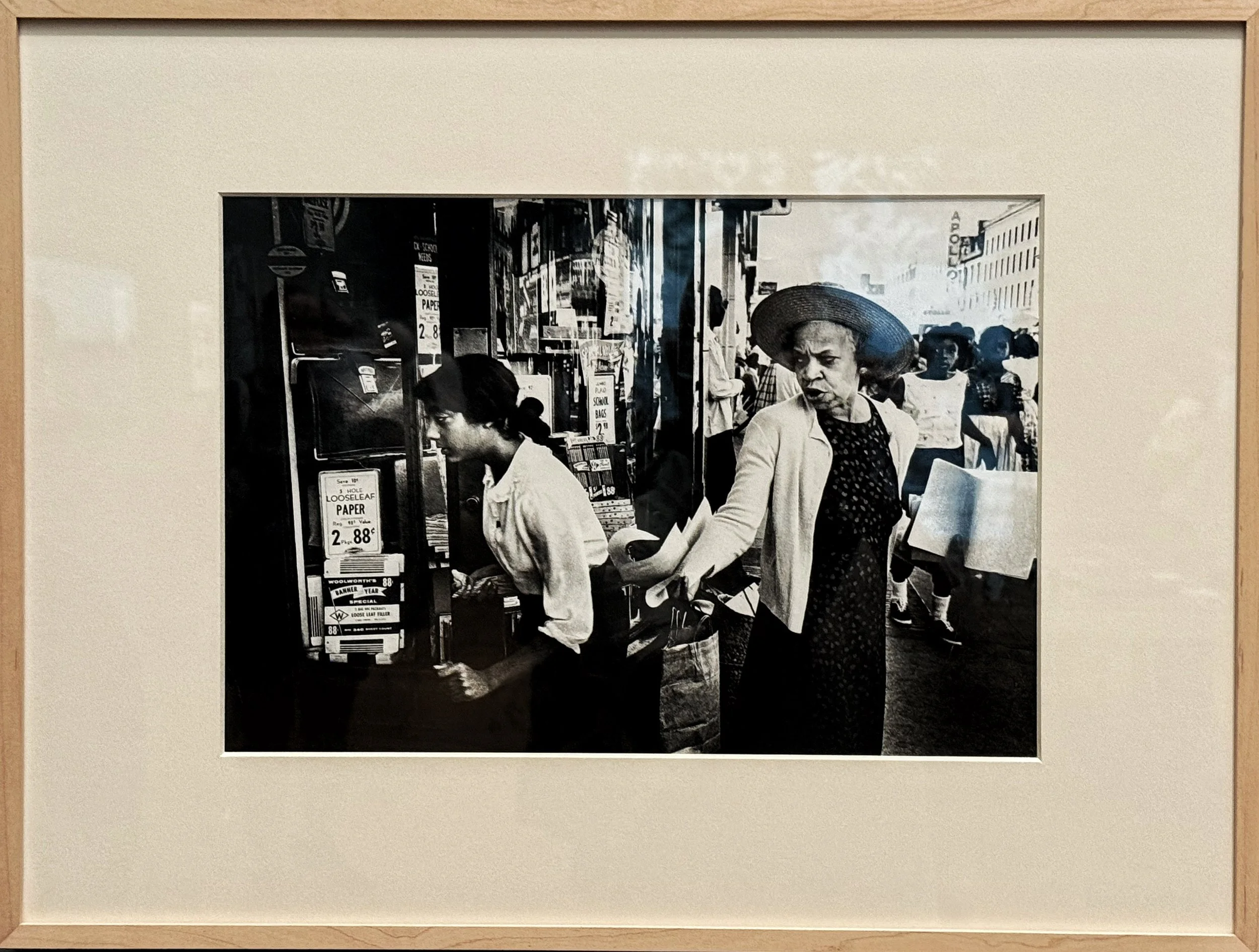
In Harlem in 1960 he photographed members of CORE protesting racial discrimination outside a Woolworth store during the campaign against the chain’s discriminatory practices.
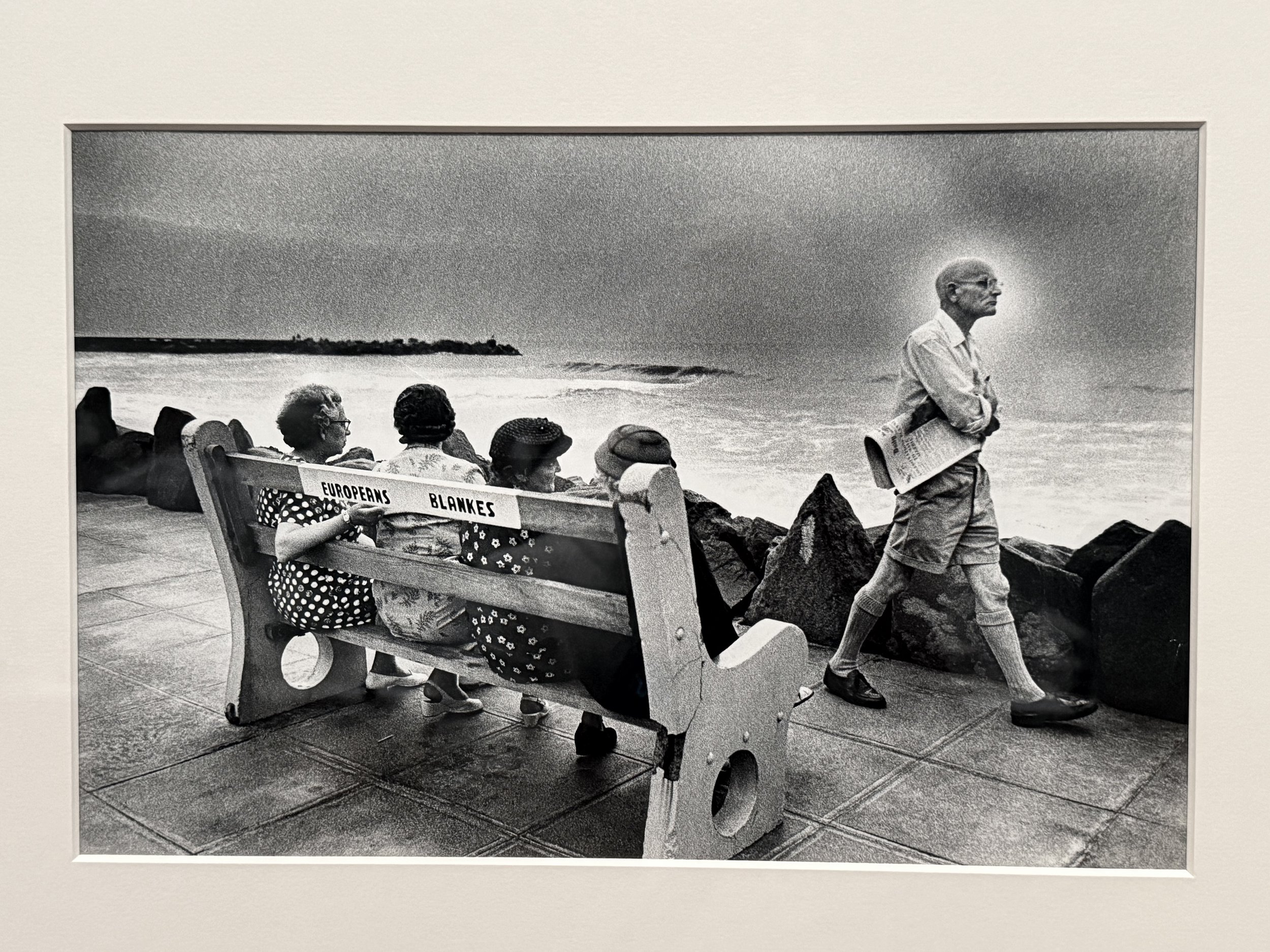
In South Africa, he manipulated the printing of an image of a Black man walking past a whites-only beach, creating a halo around the man’s head as an unmistakable commentary on apartheid.
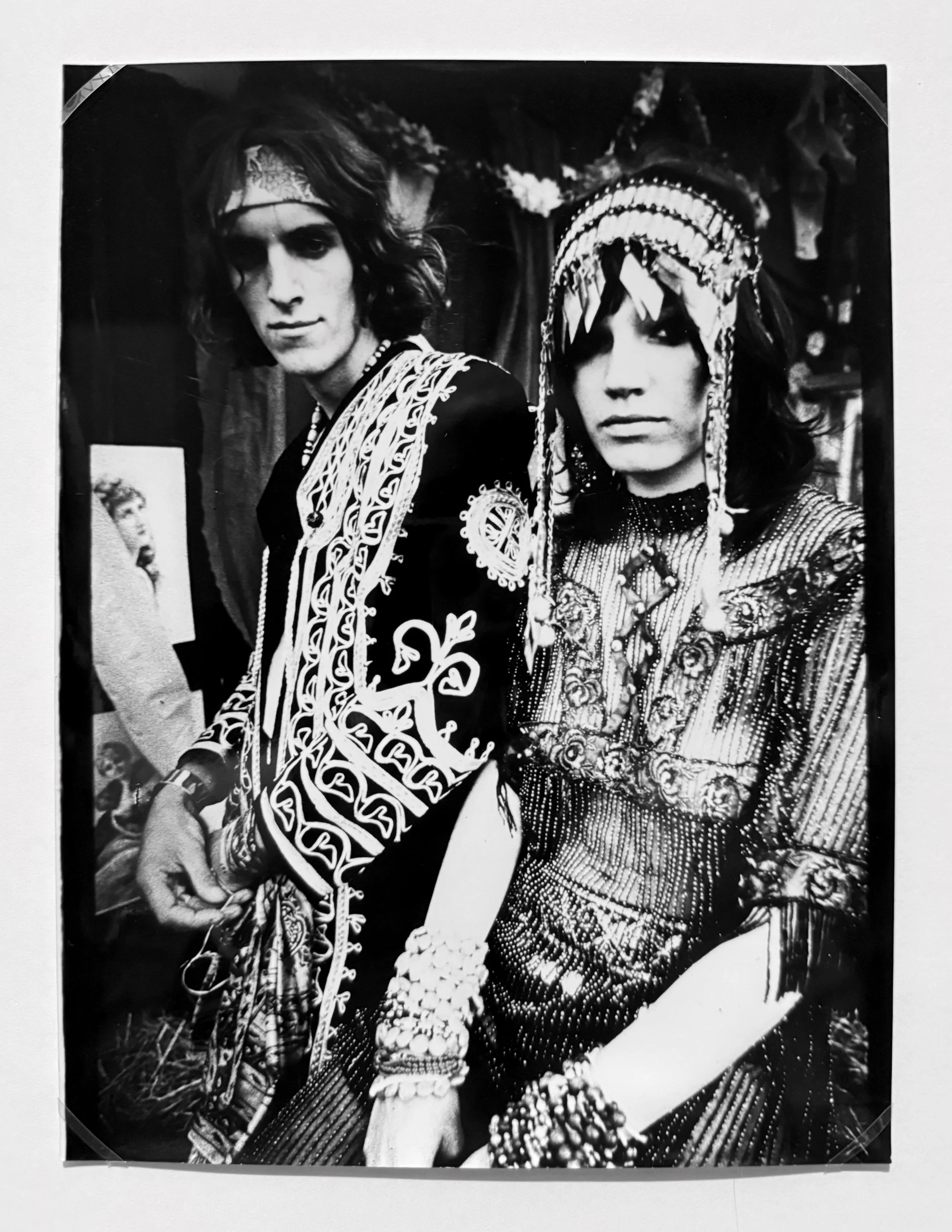
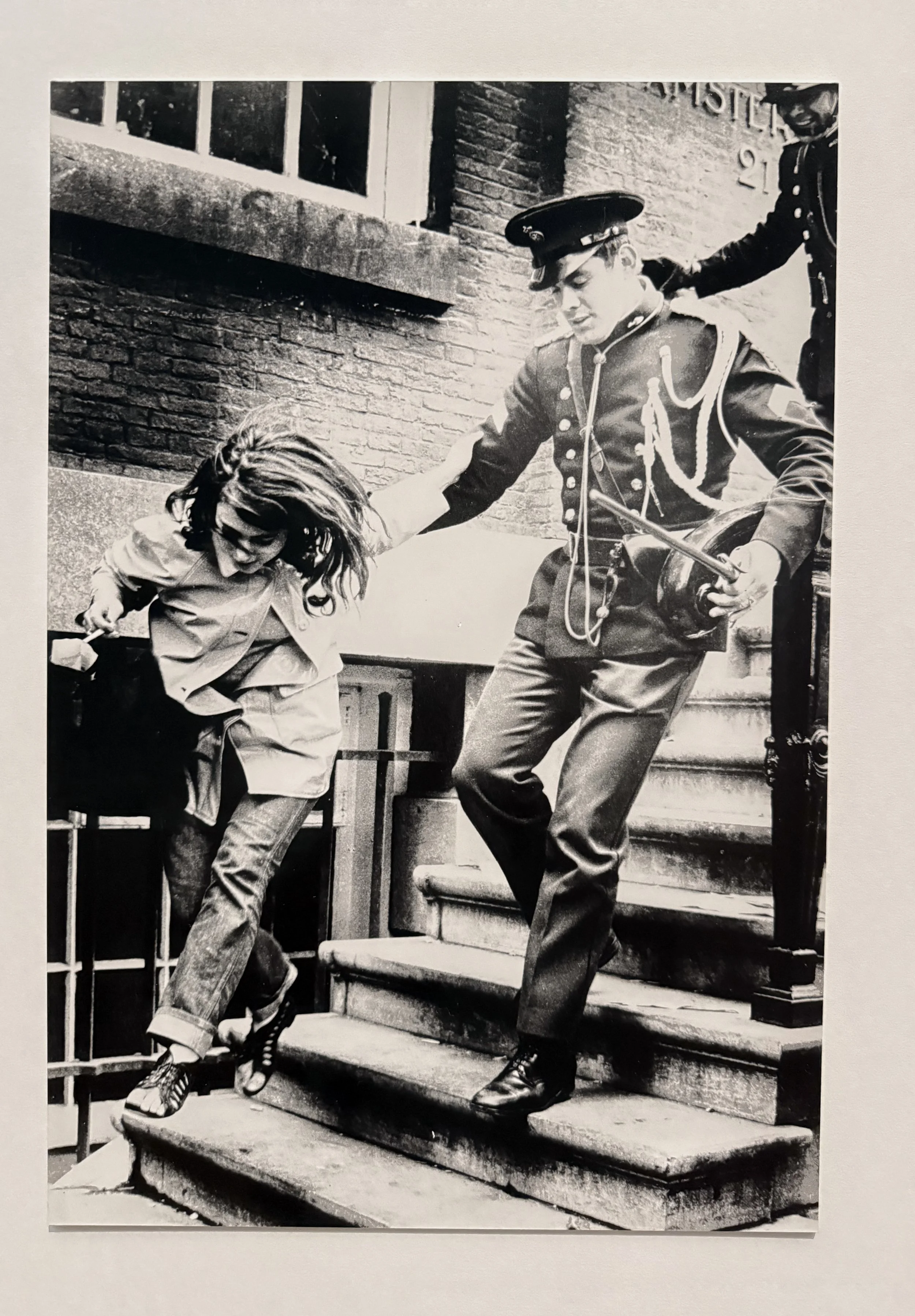
Back home, he documented Amsterdam’s counterculture—hippies, punks and squatters—and photographed the forceful police eviction of student protesters occupying the Maagdenhuis in 1969.
Yet he resisted tidy ideological labels. He admitted that he possessed few fixed convictions because he felt too much doubt. What he trusted instead was his temperament, his capacity to respond to situations with enthusiasm or anger. It was photography by instinct, and that’s very Van der Elsken.
Coming Clean in Color
Eventually, the exhibition shifts from the black-and-white work I associate most strongly with Van der Elsken into color. And here comes one of his observations about photography that I suspect will stay with me. Color, he believed, changed the rules.
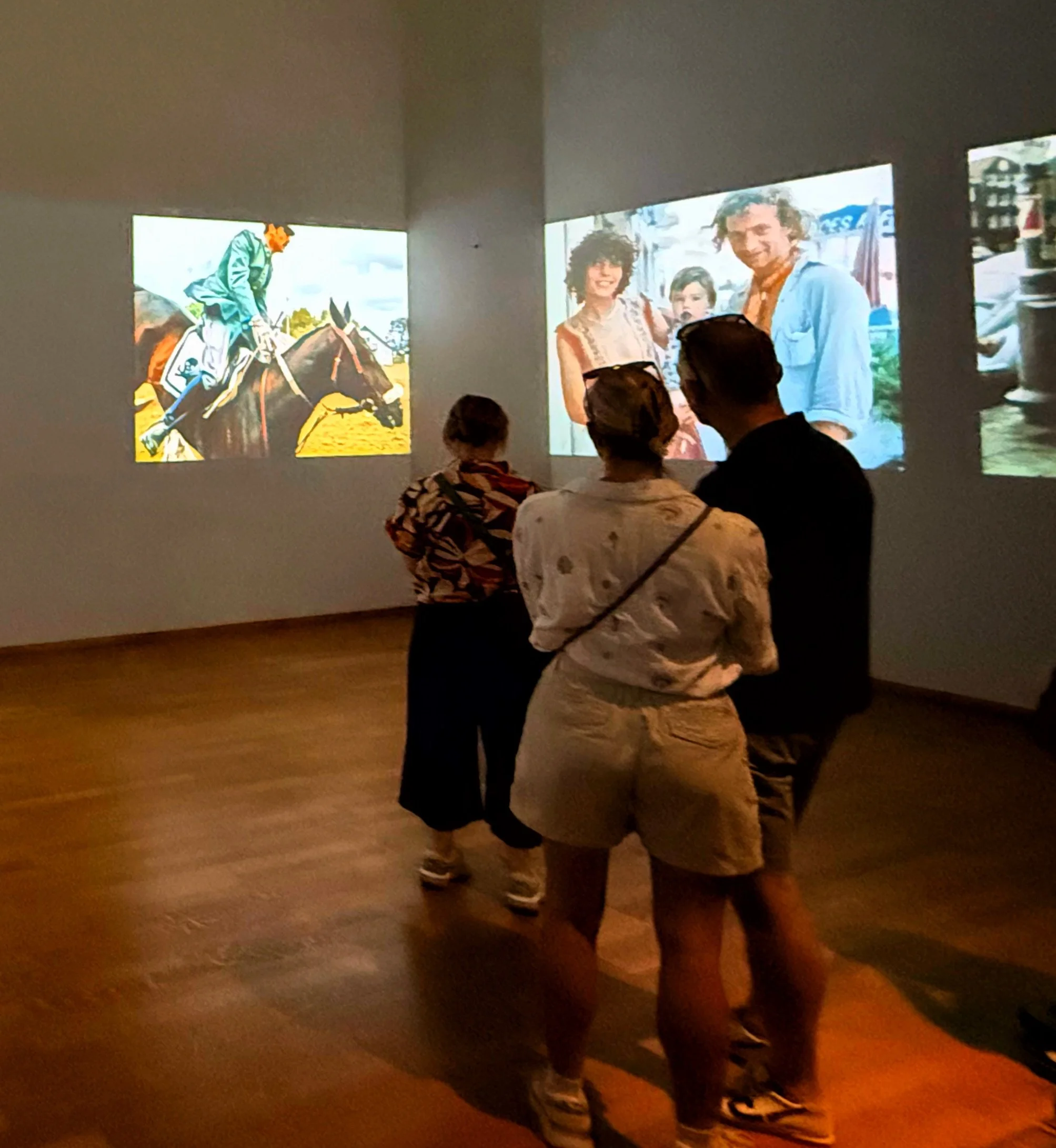
With black-and-white film he could manipulate the print extensively in the darkroom. Color transparency film offered far fewer opportunities for intervention. As he put it, “You can fool people a lot more in black-and-white images. In color photography you have to come clean, and show whether you can make good, significant photographs without trickery.” Coming from someone who was an unapologetic master of darkroom manipulation, that’s quite an admission.
Every Square Meter
But the Van der Elsken I respond to most strongly remains the man prowling the streets. Amsterdam was his territory. He walked it and drove through it in a tiny open Mini Moke, photographing the inhabitants of the city at remarkably close range. He claimed that on the street he commanded “every square meter.” People noticed him, and he was fine with it. They smiled at him, glared at him, flirted with him, challenged him, acted shy or stuck out their tongues. (In fact, a person sticking their tongue out at him is the primary photo announcing the exhibition.) All of those reactions became part of the photograph.
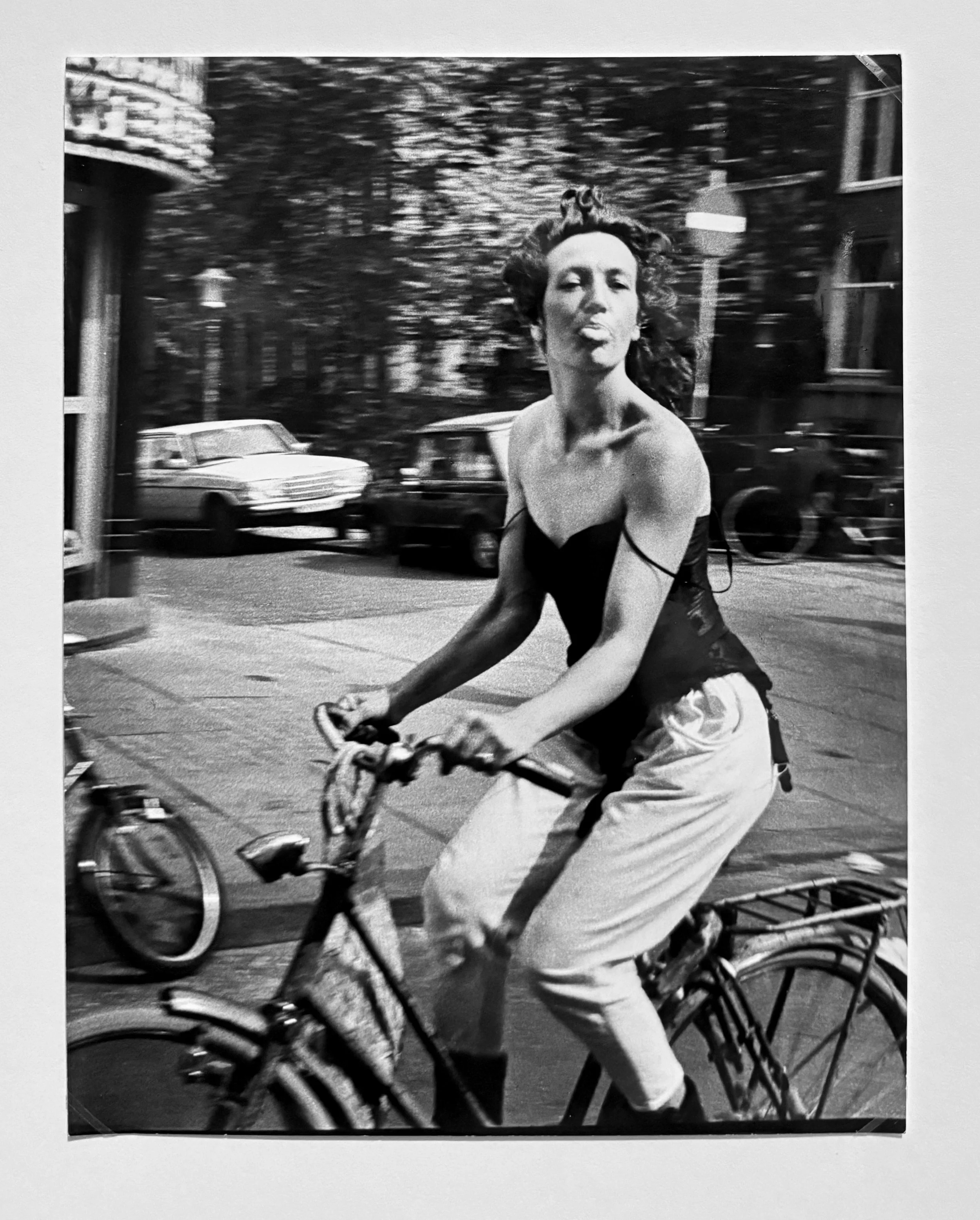
And he didn’t reserve that curiosity for Amsterdam. Van der Elsken returned to Japan at least fourteen times and estimated that he spent roughly two years photographing there, sometimes roaming the streets from sunrise to sunset.
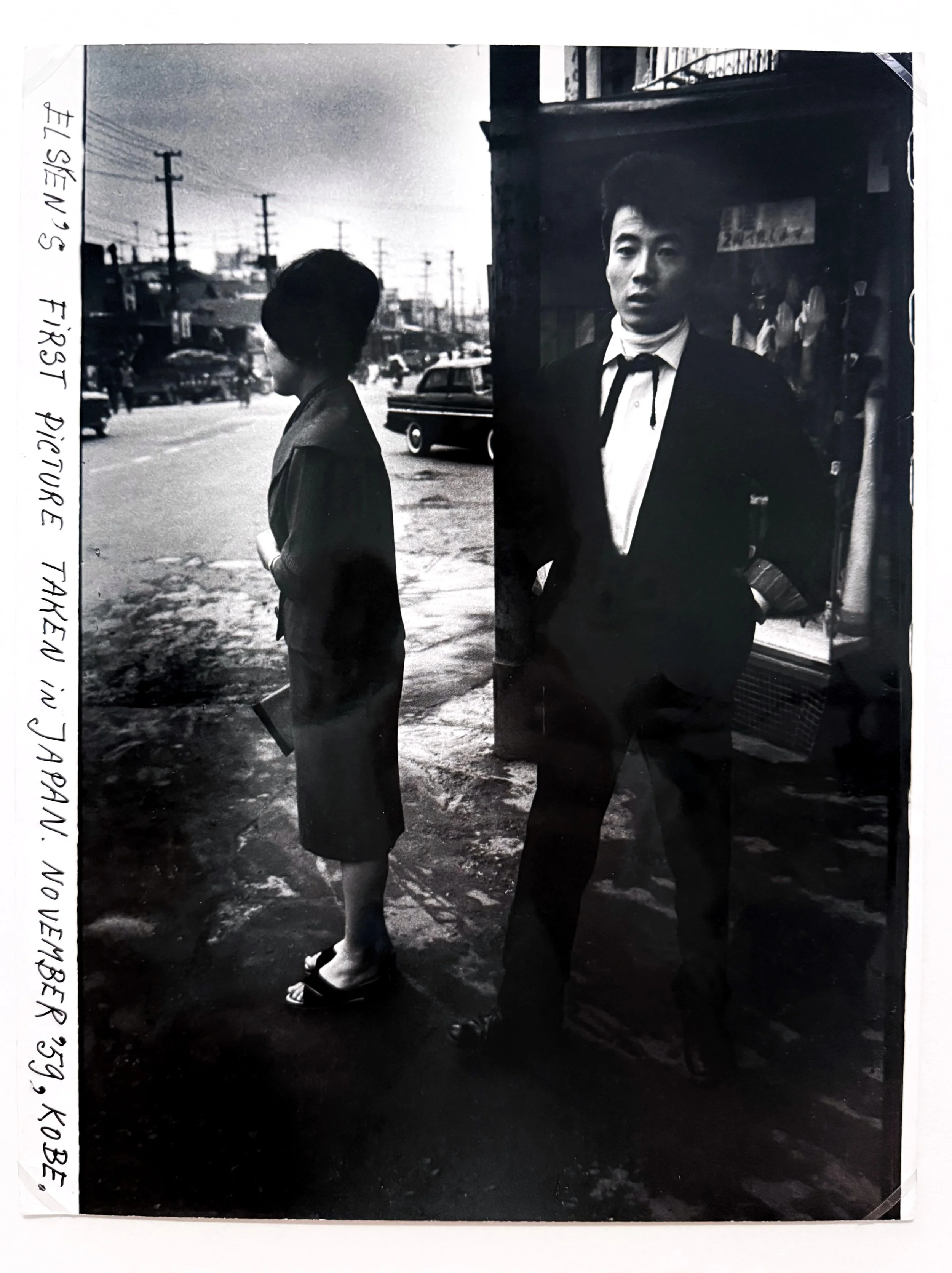
His technique could be almost comically relentless: photographing someone first with a telephoto lens as they approached, switching to a Leica as they came closer, and finally reaching for the wide-angle lens when they were practically on top of him. Once discovered, he’d attempt a few words of Japanese or English, or simply grunt at them. I love the idea, although I’d be wary of trying that in my home town of New York City. I could get punched.
A Photographer of Life
Ed van der Elsken died in 1990, but he continued working almost until the end. Even while undergoing treatment for metastatic prostate cancer, he worked from his hospital bed on The Discovery of Japan, the culmination of a fascination with the country that had lasted three decades.
What stayed with me after leaving the Rijksmuseum wasn’t any single photograph. It was his hunger.
For people. For streets. For experimentation. For books. For sex and music and politics and parties and outsiders and ordinary people behaving in wonderfully ordinary ways. For the possibilities of what a photograph could become after the shutter had been pressed. And, perhaps most of all, for the unpredictable little encounters that happen when you go out into the world carrying a camera. Van der Elsken didn’t seem terribly interested in standing at a discreet distance and observing life. He wanted in.
Maybe that’s why, nearly seventy years after some of these photographs were made, they still feel so alive.
And maybe it’s time his name appeared on a few more of those lists.