
On panic, guilt, and the moment your subject looks back.
As a veterinarian who used to specialize in cats, I’d love to say I have the stealth of a cat when I’m out doing street photography. Most of the time, I do. Other times, I have the stealth of a guy dropping a pan in the kitchen at midnight. My “invisible” approach usually ends the same way: my subject suddenly locks eyes with me, followed by that awkward beat where I pretend to be fascinated by a lamppost or a manhole cover, as if that had been my plan all along. Spoiler: no one is fooled.
But seriously, that instant of being caught is where the real emotional drama lives. It’s the moment where the ethics of street photography stop being theoretical. In that split second, I’ve crossed a small but real social boundary, and with it comes panic, guilt, and self-consciousness.
There is a standard line in street photography circles that the street is a public space and there “is no expectation of privacy”. I’ve heard it dozens of times. I’ve watched photographers like Bruce Gilden work fearlessly, unbothered by the jolt that his flash can create. For some photographers, the camera is an instrument of confrontation, and the subject’s reaction is part of the point.
But I’ve never been able to fully adopt that “public property” philosophy. Because my street photography is more about curiosity than conquest, when I’m spotted, I don’t feel like I’ve successfully exercised a right. I feel like I’ve disrupted a moment.
Although street photography is candid and unstaged, it still raises the issue of consent. That consent is implied, not explicit. Yes, I’m in a public space where taking photos is legal or tolerated, but legal permission isn’t the same as emotional permission. Once my subject notices the camera, the image becomes less about composition and more about contact. Suddenly there are two people in the frame, even if only one is visible: the subject, and my presence. I may think I’m documenting life on the streets as it unfolds, but the subject may experience that same act as interruption or exposure. Bruce Gilden thrives on that tension. I don’t. And frankly, the discomfort I feel is not something I want to overcome. It’s a sign that I still see the person, not just the picture, and I don’t want to lose that.
I don’t need big dramatic confrontations (and thankfully, I haven’t had any) to know I’ve been spotted. At some point, I realized I have a growing folder of “I’ve Been Spotted” photos that I’m actually quite fond of.
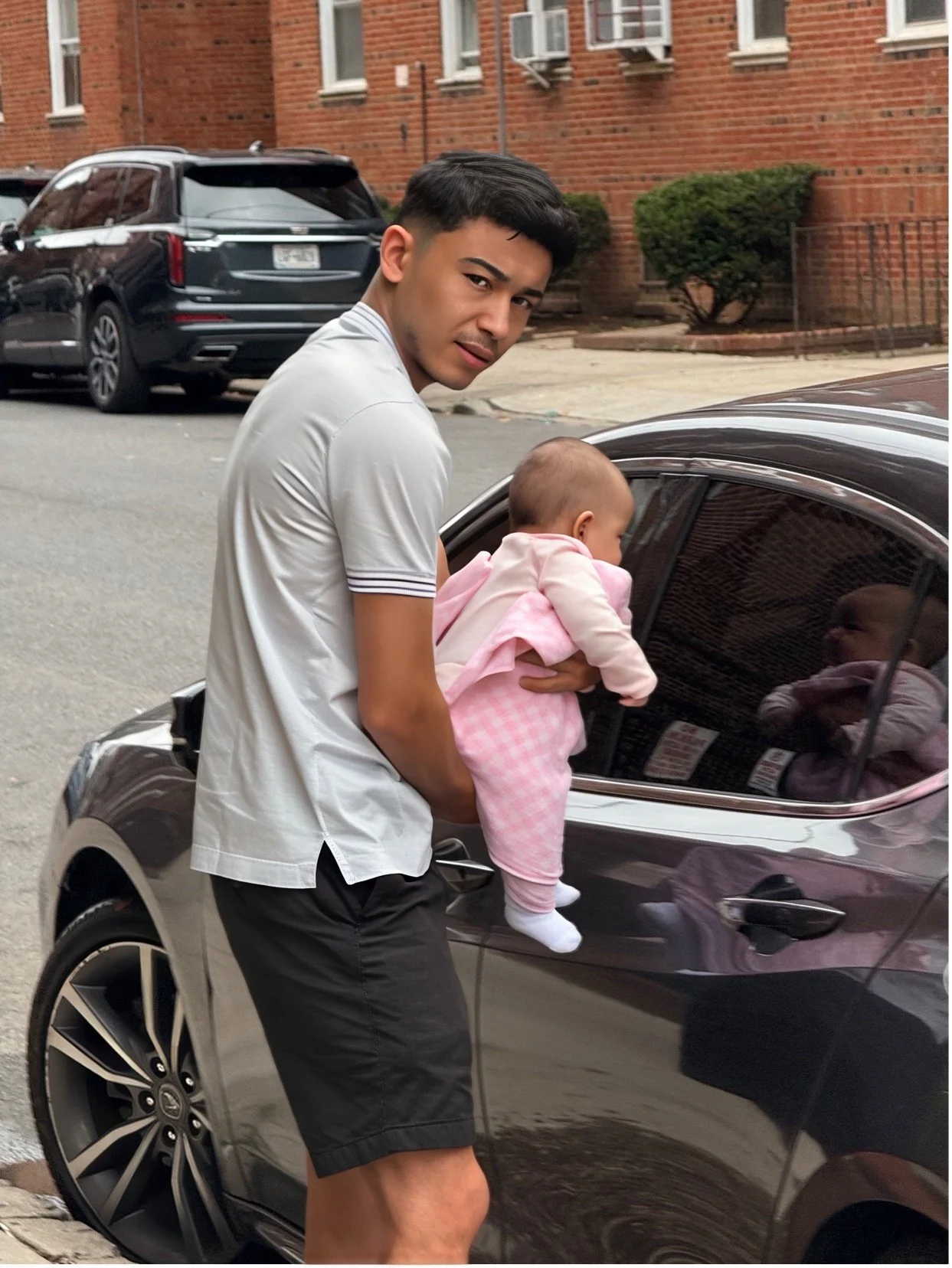
One of my favorite street photos is a black and white photo of a man holding his baby up to a car window so she could see her reflection. What you didn’t see is the moment just before, when the baby’s father spotted me and gave me the side-eye. Nothing came of it. He was having a quiet, personal moment with his baby, and I felt like an intrusive voyeur.
Arnold Plotnick
In my neighborhood in New York City, there are a lot of Orthodox Jews, and I've always been drawn to their distinctive clothing, particularly the hats, hairstyles, and beards. One day on a subway platform, I thought I was being discreet with my iPhone while photographing a man waiting for a train. Apparently, I wasn't fooling anybody. He quickly realized what I was doing and let me know that he wasn't pleased—which is also why that photograph doesn't appear in this article. Fortunately, the encounter remained brief. He was heading into the station as I was leaving, and the situation ended with nothing more than a mild reprimand and a useful reminder that we are often far less invisible than we imagine ourselves to be.
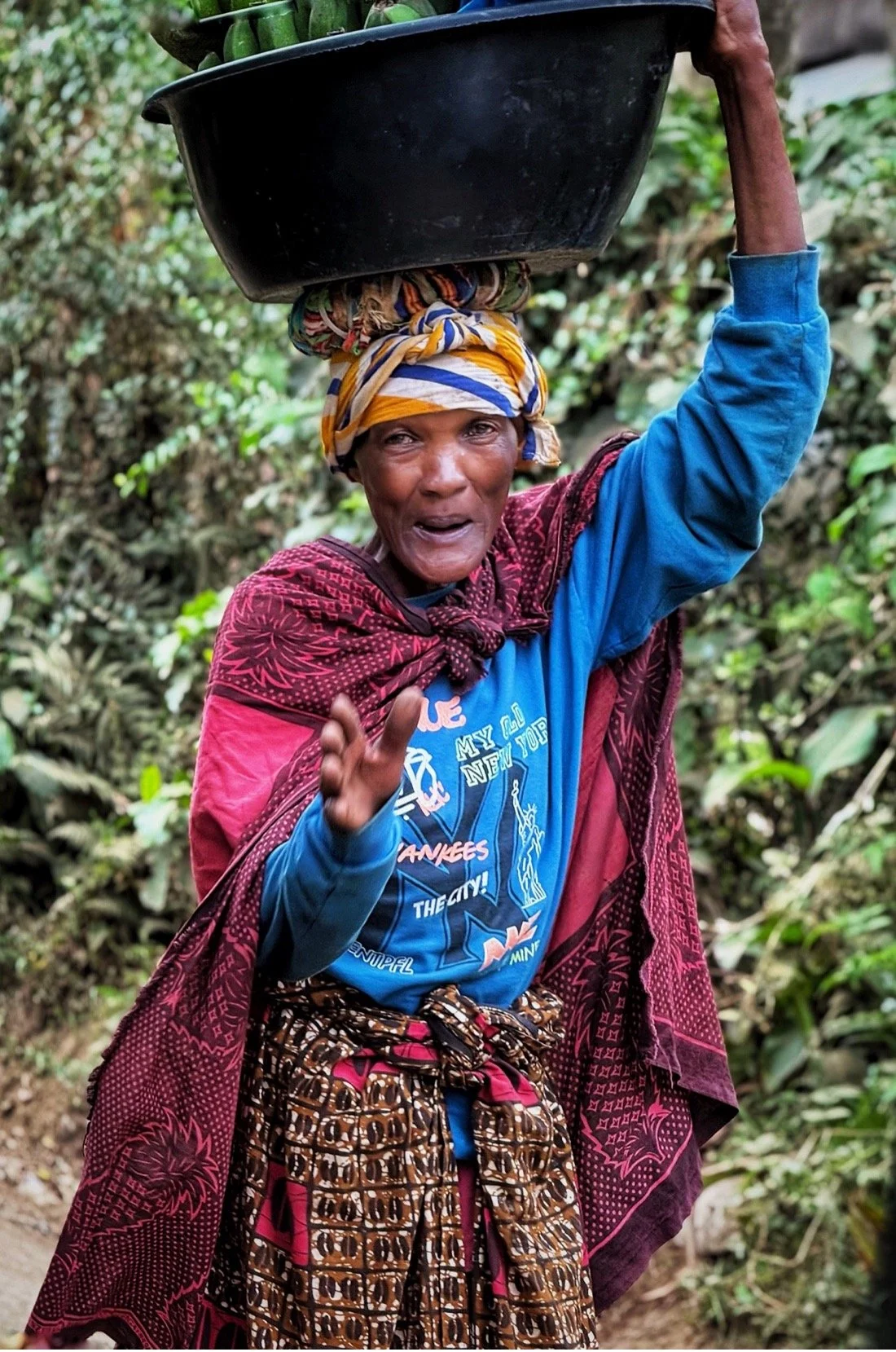
Another encounter took place in Tanzania. I was sitting in the back of a van when our driver, having become slightly lost, stopped to ask a Maasai woman for directions. She was carrying a basket of bananas on her head, and her bright clothing immediately caught my eye. Thinking I could photograph her discreetly from the back seat, I raised my camera and pressed the shutter.
She noticed.
At exactly the same moment, she waved me off and said something decidedly testy in Swahili. The message required no translation.
Later, our driver explained what had happened. Many visitors photograph Maasai people, and the customary approach is to ask permission first. The person being photographed will often request a small donation in return. I hadn't known that, and I felt embarrassed—not only because I had inadvertently offended her, but because I had also subjected the driver and the rest of the passengers to an awkward situation.
The photograph was decent. The memory of being waved off in Swahili has proven much harder to forget.
Arnold Plotnick
My intention in taking these photos was simply to document the world as I experienced it. But the photos where I’ve been spotted go beyond that. They document the exact second where my curiosity met someone else’s boundary, and the awkward tension that followed.
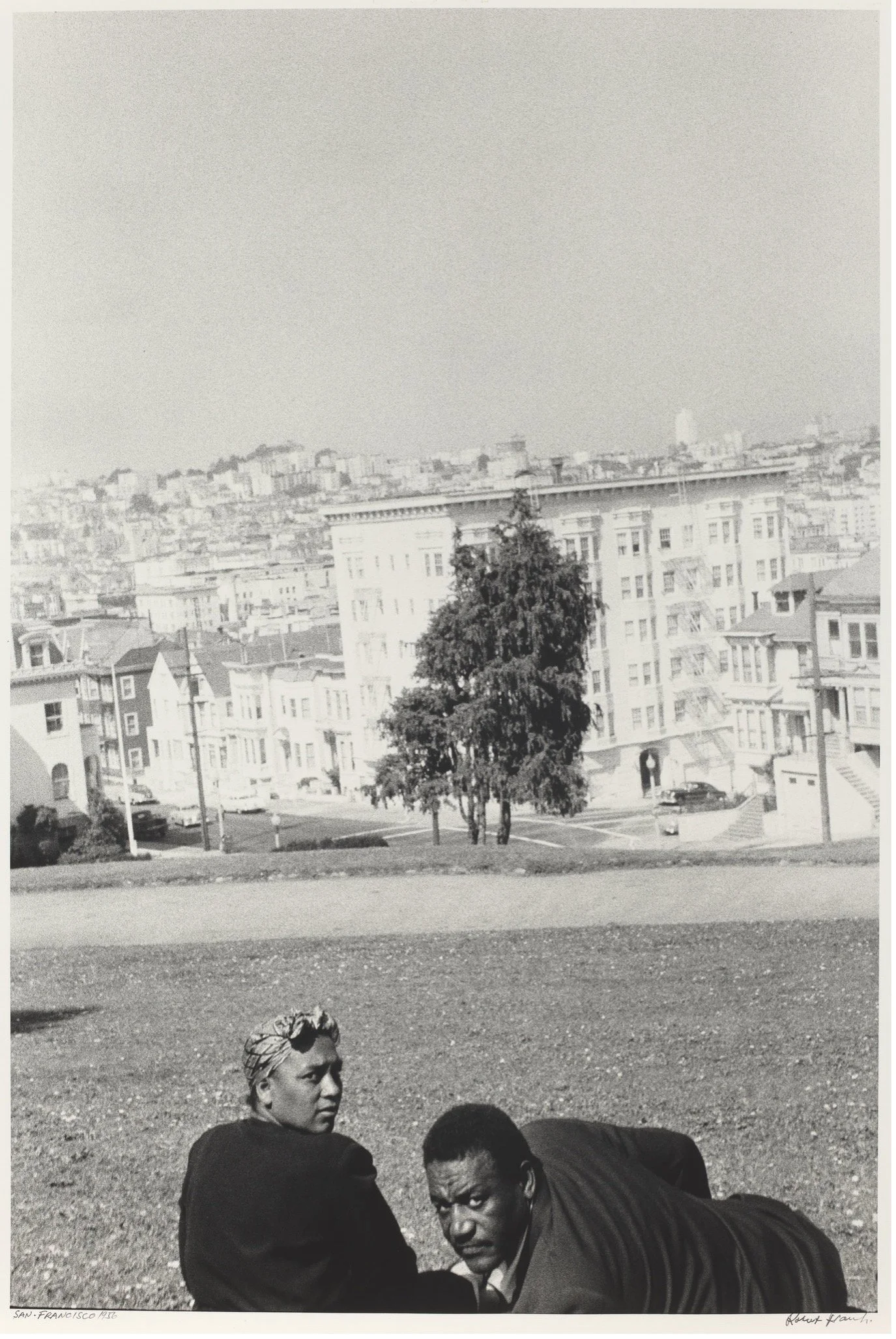
The late New York Times cultural critic Maurice Berger once pointed out that in Robert Frank’s San Francisco, the subjects’ gaze seems to register more than the photographer himself, as if Frank were a stand-in for the intimidating whiteness that shadowed the lives of Black Americans at the time. That has me wondering if, when I’m caught, the subjects are reacting to more than just a nosy New Yorker. Might I represent something more unsettling— a symbol of class, authority, or outsiderhood? Given the dramatic socioeconomic disparity that’s always present in New York, it’s something I can’t avoid thinking about.
Robert Frank
In the end, I’ve realized that the “caught” moments are just as much a part of my work as the candid ones. Sure, I can minimize the likelihood of getting caught if I constantly slink around and hide in doorways when taking my photos, but I refuse to do that. If I want to find connection in public, I have to be willing to be seen, too. I may still feel that pang of embarrassment when a subject locks eyes with me, and I might still pretend to be fascinated by the local manhole covers, but I no longer see that moment as a failure. I think of it now more as a collision than a full-on intrusion. I’d rather be the guy who gets caught being curious than the person who treats people like props. If I have to endure a little awkwardness in order to be reminded that there’s a human cost to these photos, it’s a trade I’m happy to make.